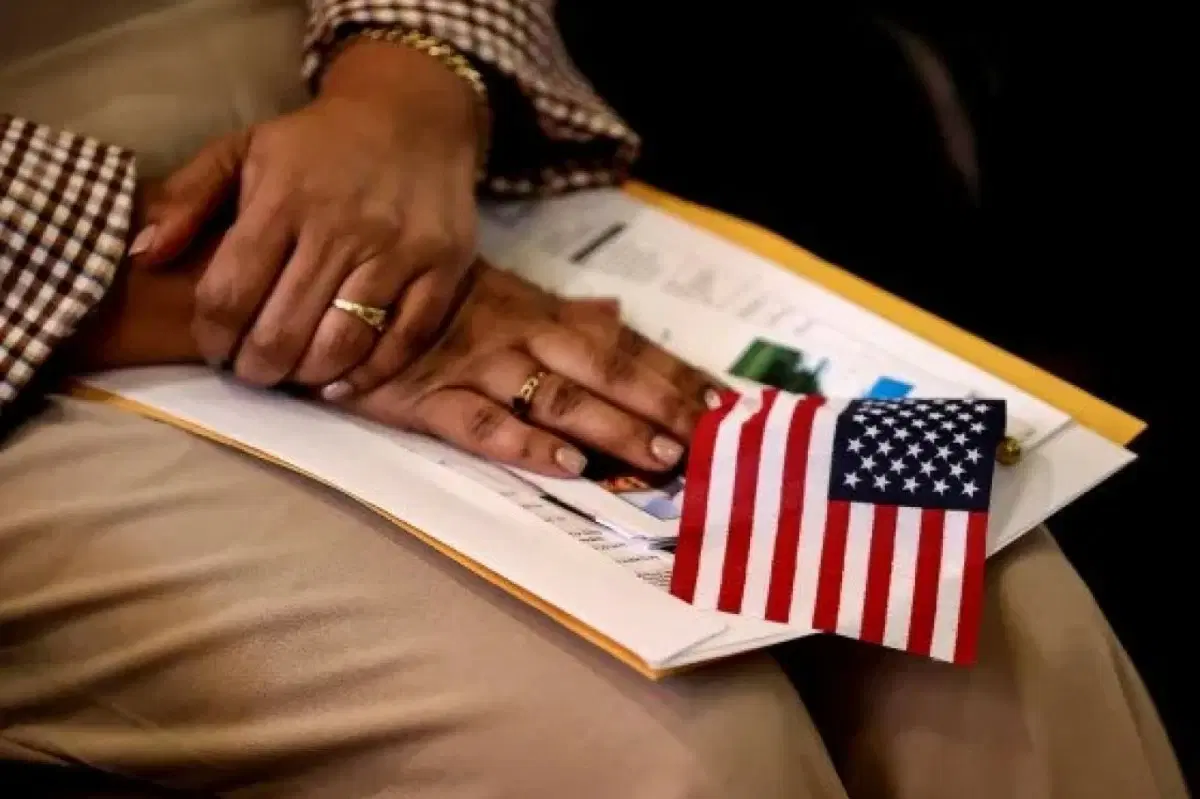
Attorney General Todd Blanche said the Department of Justice will continue to use citizenship revocation procedures in cases it deems meet legal standards, noting that the campaign focuses on cases related to national security, serious crimes, immigration and naturalization fraud.
Under US law, citizenship can be revoked from those who obtained it through naturalization if it is proven that it was granted illegally or obtained through the concealment of material information or the deliberate provision of false information, subject to strict restrictions and evidentiary requirements in court.
He added: "Our message is clear: the United States will not tolerate deception in naturalization procedures"
Under US immigration and naturalization law, citizenship can be revoked from a naturalized citizen if it is proven that the naturalization was carried out illegally, or obtained through the concealment of a material fact or the deliberate provision of false information.
Revoked naturalized citizenship is not a new procedure in the United States, as successive administrations have resorted to it over decades. However, the courts have imposed strict restrictions on the revocation of citizenship, requiring clear, convincing, and compelling evidence to prove that the naturalization was carried out illegally.
The US Supreme Court also noted that lying or providing incorrect information during naturalization procedures is not sufficient in itself to revoke citizenship, but the violation must be related to the naturalization process and have an impact on the granting of citizenship.
With Trump's return to the White House, the Department of Justice has given greater priority to this approach, focusing citizenship revocation lawsuits on cases where the government alleges that individuals obtained citizenship through fraud or concealment of material information, including cases related to national security, war crimes, human rights violations, sexual and violent crimes, and financial fraud, as well as other cases related to immigration and naturalization fraud or the provision of false information, whenever the Department deems them to meet the legal standards for citizenship revocation.