King Abdullah II placed international law at the core of his speech when he questioned how it could be enforced if the international will to label violations by their true names was absent. The problem facing the international system today, as expressed by King Abdullah II, is not the absence of legal rules governing occupation, armed conflicts, and protecting civilians, but the extent of commitment to their application and enforcement on everyone without exception.
In this context, King Abdullah II's keenness was noticeable in accurately describing Israeli practices, refusing to use terms that might downplay their nature; demolishing Palestinian homes to expand illegal settlements is not the enforcement of law, the seizure of occupied lands is not registration but de facto annexation, and the checkpoints that disrupt the lives of Palestinians are not merely security measures, and forcing Palestinians to leave their lands is a forced displacement that constitutes a war crime.
The importance of this royal proposal lies in the fact that the legal description of Israeli violations is the starting point in determining the responsibility arising from them. Talking about serious violations of international law shifts the discussion from mere political condemnation of the occupation government's behavior to exploring legal responsibility and accountability for the committed acts, especially with the continuation of attacks on civilians and the expansion of settlement activity.
The speech does not stop at the limits of description and accountability, but moves to the subject of enforcing international law. His Majesty was not content with demanding a halt to violations or issuing more international resolutions, but named practical tools that the international community has previously used in other cases, primarily sanctions, asset freezes, bans, and diplomatic isolation.
This proposal carries an important legal implication; it calls on the international community to use existing accountability mechanisms that have been resorted to against other countries for violating international law rules, raising a question about their non-use when it comes to Israeli violations. His Majesty's most prominent phrase was that international resolutions related to Israel remain "ink on paper," confirming that the problem is no longer the absence of relevant international resolutions, but the gap between their issuance and enforcement.
One of the deepest legal dimensions of the speech stands out in this context, which is the principle of equality in the application of international law. The credibility of international law is not measured only by the number of conventions and resolutions issued in its name, but by the extent to which all countries are subject to its rules and enforcement mechanisms. The selectivity in applying this law, using punishment and accountability tools in one case and stopping in another, does not only weaken the international decision alone, but undermines confidence in the law and international institutions.
This logic extends to the responsibility of the international community itself, which King Abdullah II moved from the circle of inability to the circle of choice, affirming that the tools are available, the legal rules are in place, and the facts are known; therefore, the continued inaction cannot be explained by inability, but by the absence of political will to use the available legal tools. The absence of accountability not only hinders the enforcement of the law but also deprives it of its deterrent function and perpetuates impunity, leading to what His Majesty described as a "state without deterrence."
In conclusion, King Abdullah II's speech presented a reading that went beyond defending Palestinian rights to warning of a deeper crisis related to the duality in the application of international law. The danger lies not only in the continuation of Israeli violations but also in the fact that the law approved by the world's countries becomes applicable to some and not others, and that United Nations resolutions turn into ink on paper. The royal message from New York is clear; the world knows what is happening in Palestine and has the tools necessary to act, but the selectivity in using them threatens confidence in international law and its ability to protect everyone without exception.
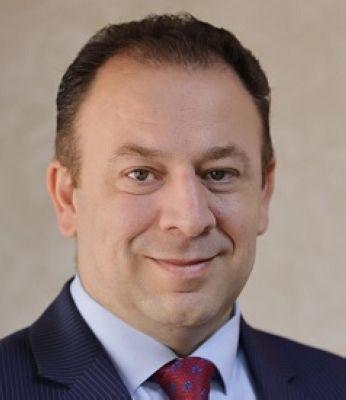
* Professor of Constitutional Law at the Faculty of Law, Jordan University