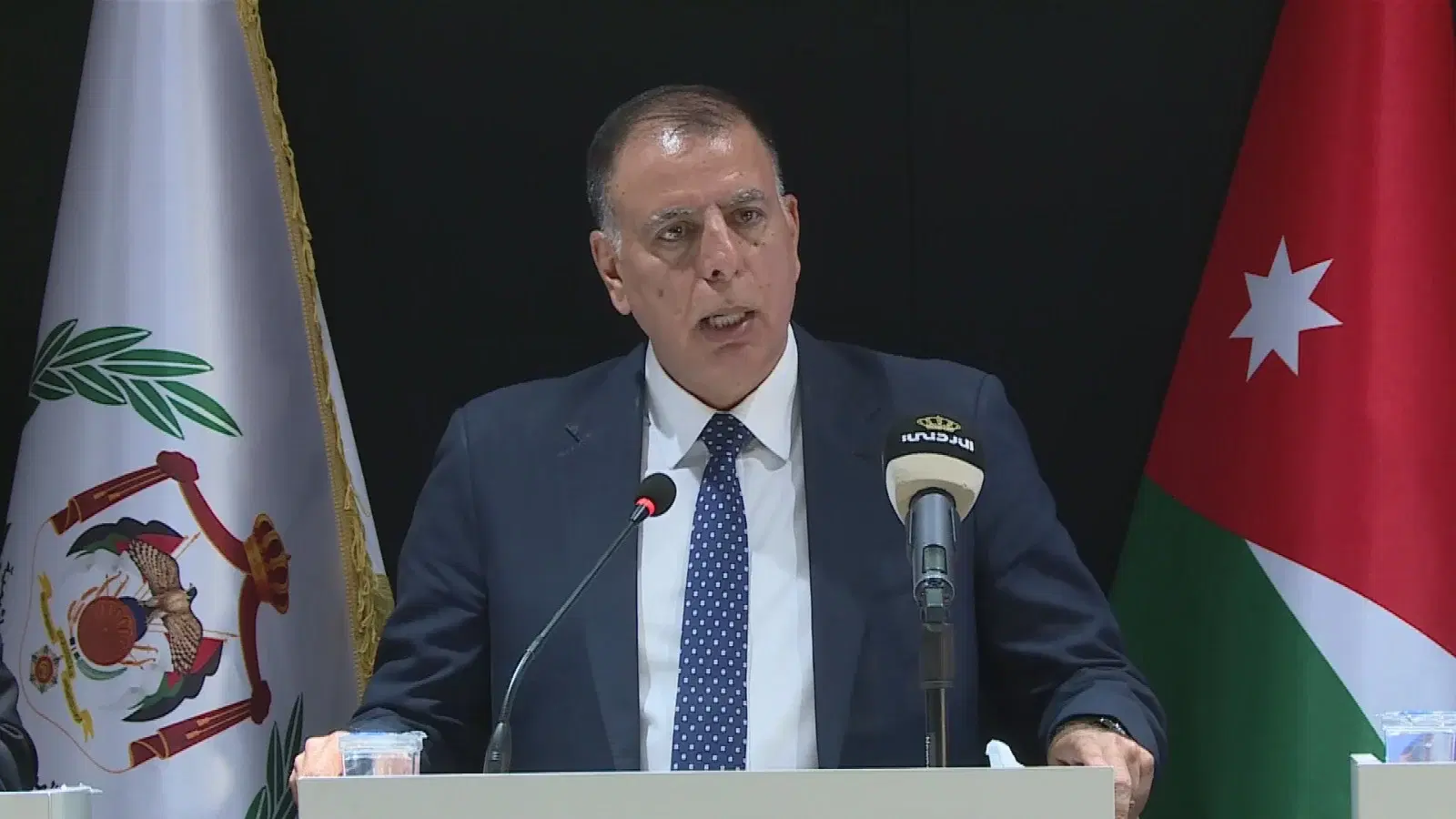
The Forum launches a policy paper to develop the insurance sector and expand its services
A policy paper recommends diversifying insurance products, expanding digital distribution, and enhancing transparency
Follow Al Rai

The Forum launches a policy paper to develop the insurance sector and expand its services
A policy paper recommends diversifying insurance products, expanding digital distribution, and enhancing transparency
Smeirat: The insurance portfolio is largely concentrated in motor and medical insurance
Smeirat: Burdens on companies and their financial results due to staged accidents, the purchase of accident reports (croquis), and forged medical reports
Smeirat: The disparity in medical service costs between companies and self-funded health insurance funds affects the pricing of coverage and the transfer of contracts between entities
Smeirat calls for standardizing the application of medical fees and protecting patients from the consequences of disputes
Al-Kloub: The transfer of supervision to the Central Bank has contributed to strengthening the focus on governance and financial solvency
Al-Kloub: The sustainability of companies' business requires reviewing the factors affecting claims costs and pricing
Al-Kloub: Enhancing the Federation's role further in building databases and establishing digital platforms within the parameters of governance, transparency, and data preservation and security.
Al-Kloub: The Federation seeks to serve member insurance companies by expanding the use of artificial intelligence tools, which reflects on the quality of service provided, and establishing insurance pools with the aim of reducing administrative and operational costs for companies
Al-Kloub: Calls on companies to establish new digital distribution channels and places the Federation's capabilities to be part of them to reach a wider segment of citizens and insurance users
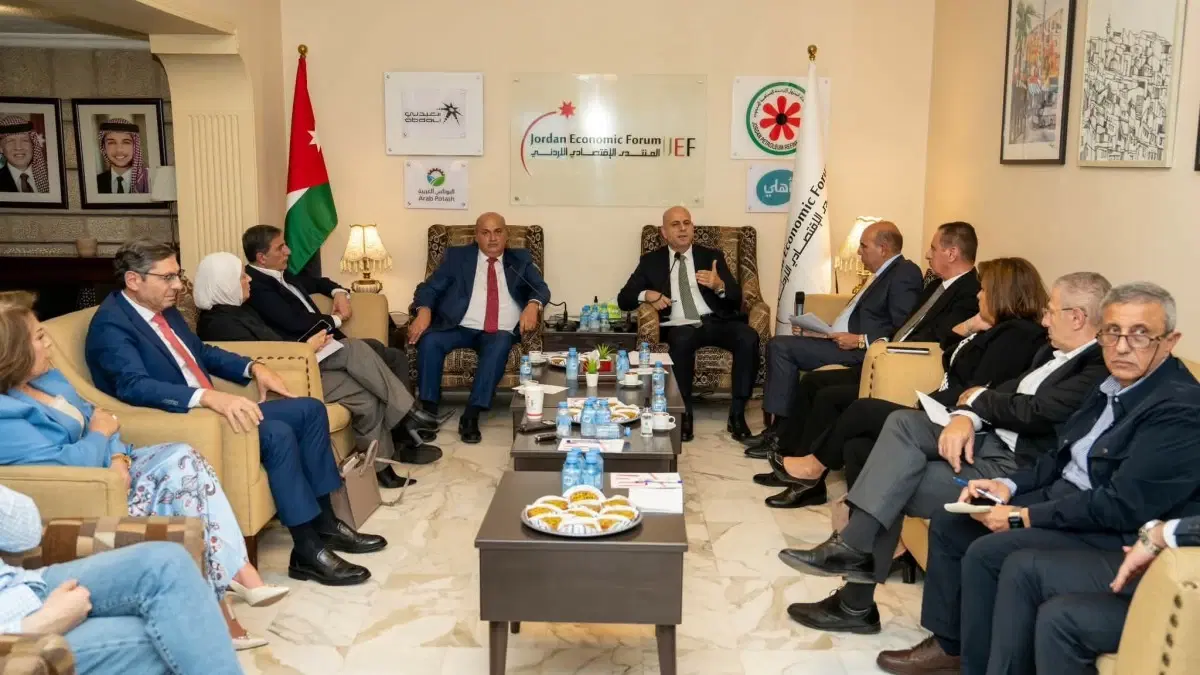
The Jordan Economic Forum held a session as part of its economic salon meetings titled "The Insurance Sector in Jordan: Reality, Challenges, and Development Prospects," hosting Engineer Majed Smeirat, Chairman of the Jordan Insurance Federation and Chairman of the General Arab Insurance Federation, and Dr. Moayad Al-Kloub, CEO of the Jordan Insurance Federation, with the participation of the Forum's Vice Chairman Mazen Al-Hmoud, and moderated by Forum Board of Trustees member Dr. Adnan Al-Araj.
At the beginning of the session, the Forum launched a policy paper titled "The Insurance Sector in Jordan: A Reading of Performance and Challenges," which addressed market development, company performance, and the regulatory framework, and provided recommendations to expand insurance coverage, diversify products, improve claims processing, and enhance disclosure, supporting the sector's robustness and its ability to serve the economy.
The paper showed that insurance premiums rose to about 856.2 million dinars in 2025, compared to 781.5 million dinars in 2024, while they reached 417.5 million dinars during the first five months of 2026, a growth of 8.7 percent compared to the same period of the previous year, reflecting the expansion of insurance business volume.
The paper recommended developing insurance products that meet the needs of individuals and establishments, expanding their digital and banking distribution channels, and publishing periodic indicators on claims settlement and complaints, in addition to enhancing the transparency of financial and technical data, allowing for monitoring market performance and identifying opportunities to improve services, expand insurance protection, and enhance confidence in the sector and its services.
In turn, Smeirat said that insurance combines service provision and financial work, as companies provide policy issuance and claims settlement services, and operate as financial institutions subject to the supervision of the Central Bank, noting the sector's history extending since the 1950s, and the expertise and competencies it has accumulated that have contributed to the development of Arab insurance markets.
He explained that diversifying the insurance portfolio represents an important area for market expansion, given that a large part of the business is concentrated in motor and medical insurance, compared to smaller volumes for marine, engineering, and property insurance, despite their direct link to protecting projects, productive activities, and investments.
He pointed out that the volume of marine insurance is approximately 30 million dinars annually, considering that developing these branches and expanding their reach provides the sector with greater opportunities and strengthens the link of its services to the needs of the economy, rather than continuing to rely on a limited number of products.
Smeirat pointed to the importance of aligning the number of companies with the market size and encouraging mergers that help build more sustainable institutions, explaining that incentives provided for this purpose could support the restructuring of the sector and enhance the efficiency of its operations.
He emphasized the importance of stable legislative and regulatory frameworks to enable companies to plan and address practices that increase claims costs, including staged accidents, the purchase of traffic accident reports (croquis), and forged medical reports, as he described, due to the burdens they leave on companies and their financial results.
He indicated that performance evaluation should include technical profitability, return on investment, and shareholders' equity, in addition to the volume of premiums, noting that achieving returns commensurate with risks and operational burdens encourages companies to continue and develop their services and enhances the sustainability of the sector.
Regarding medical insurance, Smeirat stressed the importance of applying medical fee regulations equally to various insurance entities to achieve fair competition, explaining that the disparity in costs between companies and self-funded health insurance funds affects the pricing of insurance coverage and the transfer and leakage of contracts between entities and their exit from the insurance companies' portfolio in favor of the funds.
Smeirat addressed the dispute between insurance companies and the Medical Association, explaining that the disparity in the application of the medical fee schedule between companies, self-funded health insurance funds, and other entities leads to differences in coverage costs and affects fair competition.
He pointed out that the increase in medical service costs is reflected in the prices of insurance policies borne by subscribers, calling for a review of the legislation regulating the determination of fees and the provisions of the doctors' cooperative fund system, and involving various concerned parties, including consumer representative bodies.
He stressed the need to ensure the continuity of treatment and not to burden patients with the consequences of disputes between insurance entities and medical service providers.
For his part, Al-Kloub confirmed that the transfer of supervision to the Central Bank of Jordan has contributed to strengthening the focus on governance, transparency, financial solvency, and the ability of companies to meet their obligations, in addition to developing legislation related to accelerating the payment of claims, which supports the integrity of the sector and protects the rights of the insured.
He pointed to the importance of the Insurance Contracts Law No. 11 of 2026 in improving disclosure and clarifying the rights and obligations of customers, as well as the terms, coverage, and exclusions of policies, considering that the regulatory and technical reforms witnessed by the sector constitute an important foundation for improving the work environment and strengthening confidence in the relationship between companies and those dealing with them.
He explained that maintaining confidence requires clarifying the status of operating companies and the mechanisms of oversight over them, and avoiding generalizing the experience of distressed companies to the entire sector, noting the importance of completing reforms by addressing risks associated with major insurance branches, especially motor and medical.
He said that the sustainability of companies' business requires reviewing the factors affecting claims costs and pricing, because premium growth does not necessarily mean improved results if accompanied by obligations resulting from rising service costs such as medical fees and additional losses, calling for allowing wider space for competition and contractual relationships that take into account service quality, efficiency, and experience.
Regarding the investment role, Al-Kloub indicated that insurance companies can contribute to supporting economic activity, employment, and public revenues, emphasizing that strengthening this role is linked to achieving sustainable technical profits, and not just relying on investment returns that may be affected by market fluctuations, while maintaining the companies' ability to meet their obligations.
On the digital transformation file, Al-Kloub believed that artificial intelligence represents an important opportunity to develop the insurance sector, reduce costs, and improve risk management, despite the expenses required for investment in technology and data protection, confirming that the return on this development must appear in the efficiency and quality of service.
He explained that these technologies help in detecting fraud indicators and monitoring unusual patterns in claims, whether in motor or medical insurance, through data analysis and identifying the concentration of accidents or claims at specific entities or locations, which supports verification and decision-making.
He indicated that the Federation is working on developing its systems in this direction, with a trend towards cooperating with the Central Bank in applications related to motor insurance, and for the Federation to play a greater role in building databases, establishing insurance pools, and creating digital platforms that serve member insurance companies through the use of artificial intelligence tools within the parameters of governance, data preservation and security, which reflects on the quality of service provided, reduces administrative and operational costs for companies, and creates additional digital distribution channels to reach a wider segment of citizens, noting the possibility of employing digital analysis in monitoring practices that increase costs and improving monitoring and risk management tools.
He emphasized that artificial intelligence is a supporting tool for employees and not a substitute for them, as human experience remains necessary to evaluate outputs and make decisions, considering that combining professional competencies with digital tools allows for improving productivity, accelerating work completion, and developing the customer experience.
Al-Kloub called for setting clear standards and controls for the use of artificial intelligence tools, especially when dealing with citizens' data and insurance information, to ensure their protection and avoid the risks of uncontrolled use, confirming that digital transformation should proceed in parallel with protecting privacy and information security.
He emphasized that the criterion for the success of technical development is for the citizen to feel a tangible improvement in the quality of service and the ease of obtaining it, and for modern applications and systems to contribute to providing more efficient services, thereby enhancing trust in insurance and expanding its benefits for individuals and establishments.
At the conclusion of the session, an extensive discussion took place regarding opportunities to develop the insurance sector and enhance its role in the national economy, ways to diversify products and improve claims settlement, and addressing challenges related to vehicle and medical insurance. This is in addition to employing digital transformation and artificial intelligence to increase service efficiency and risk management, as well as the importance of developing legislation, protecting policyholders' data, and ensuring service continuity, in a way that strengthens confidence in the sector and expands the benefits of its services for individuals and establishments.
Know more about this story?Send us a tip
Ask about this report — answers stay grounded in its text.