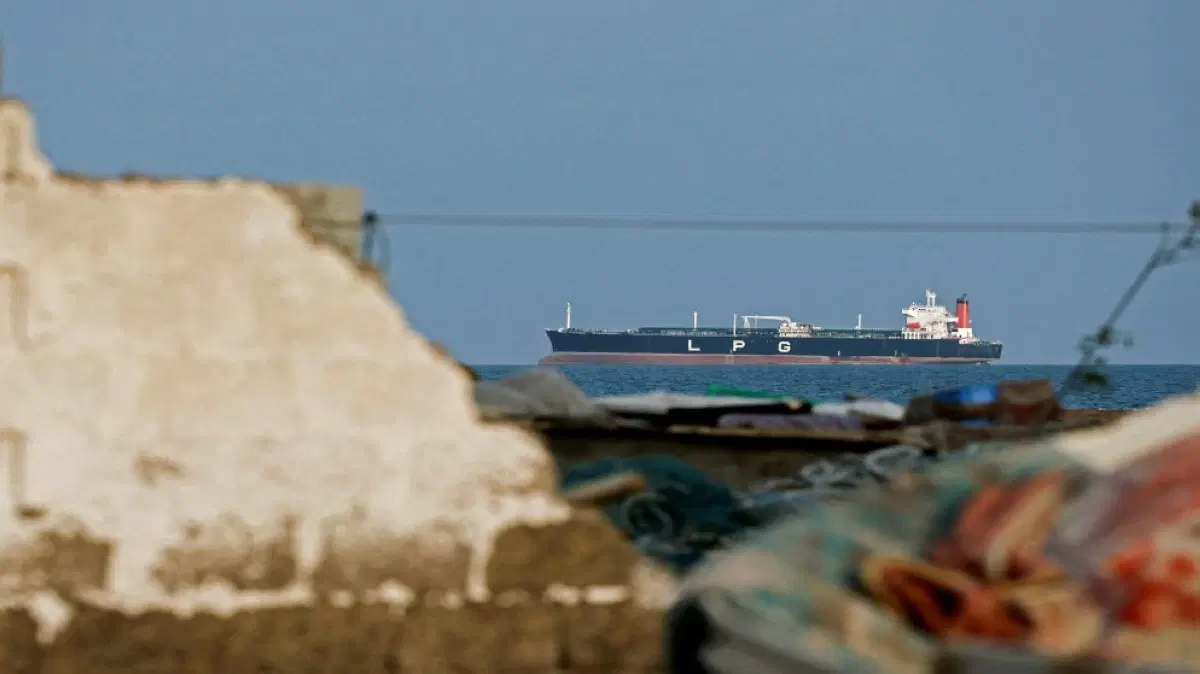
Navigation Movement in Hormuz and Bab al-Mandab.. Numbers Reveal What is Happening
Amman2 min read
Share
Shipping data showed that navigation in the Strait of Hormuz witnessed further decline at the beginning of this week, following the escalation of attacks in the Middle East.
Initial data from Kepler, on Tuesday, showed that the number of ships crossing the strait was 4 on Monday, down from 10 the previous day.
Two dry cargo ships left the waterway, one loaded and the other empty, while two oil tankers entered the strait, both sailing without cargo.
These figures do not include some ships that may have crossed the strait with their AIS systems turned off to avoid detection.
The Iranian Fars News Agency reported, citing the Guard, that an oil tanker was hit by an explosion and a fire broke out after it hit mines in the Strait of Hormuz, without specifying the date of the incident.
Hormuz Meeting Postponed
The Arab Gulf countries also postponed talks scheduled with Iran to discuss possible agreements on the Strait of Hormuz on Monday, which was a setback for diplomatic efforts aimed at ending the conflict and its impact on global oil supplies.
The Houthis in Yemen also announced yesterday that they launched dozens of missiles and drones towards a military airbase in Khamis Mushait in southern Saudi Arabia, targeting aircraft hangars, radar systems, runways, and ammunition depots, in response to Saudi airstrikes in Yemen.
Bab al-Mandab Strait
In the Bab al-Mandab Strait, Kepler data indicated that 21 cargo ships crossed on Monday, down from 28 the previous day.
Before the start of the Iran-Iraq war on February 28, the Strait of Hormuz usually saw about 125 large commercial ships per day - including oil and gas tankers, bulk cargo ships, and container ships - a movement that accounts for about 20 percent of the world's daily crude oil and liquefied natural gas supplies.