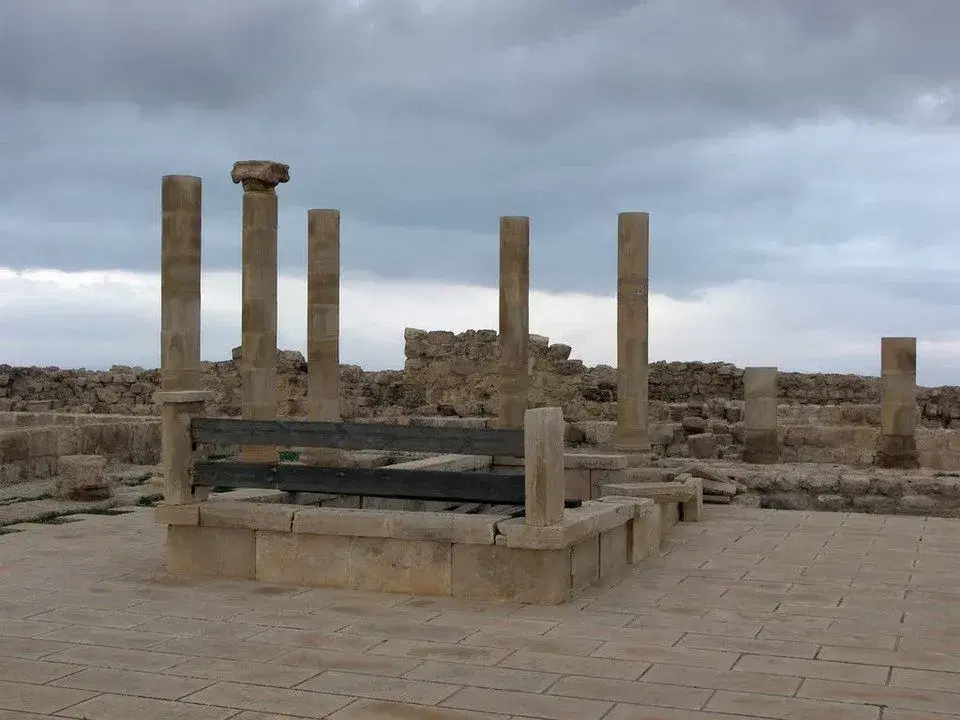
Machaerus Archaeological Site Attracts Around 9,000 Visitors in 7 Months.. Today's Event Enhances Its Tourism Presence
Amman4 min read
Share
The number of visitors to the archaeological site of Machaerus reached 8,996 during the first seven months of this year (January - July), compared to 9,066 visitors during the same period last year, a slight decrease of 0.8%, according to preliminary data from the Ministry of Tourism and Antiquities reviewed by "Al-Mamlaka".
According to the data, the number of foreign visitors to the site from January to July 2026 reached about 7,304 visitors, compared to 8,251 visitors during the same period in 2025, a decrease of 11.5%.
In contrast, the number of Jordanian visitors rose to 1,692 during the first seven months of the current year, compared to 815 visitors during the same period last year, an increase of 107.6%.
The site recorded its highest number of visitors last February with 3,669 visitors, compared to 2,809 visitors in the same month last year.
On Saturday, under the patronage of HRH Prince El Hassan bin Talal, a cultural and spiritual program will kick off at the historical site of Machaerus as a prelude to the global commemoration of Saint John the Baptist in 2030, hosting a performance of Handel's musical masterpiece "Messiah" under the slogan "Echoes of Faith... and Voices of Heritage".
Hosting this musical work in Machaerus holds special significance due to the site's religious and historical importance.
Minister of Tourism and Antiquities Imad Hijazin affirmed in a previous statement that the Kingdom is blessed with some of the most important Christian pilgrimage and religious heritage sites in the world.
The Executive Director of the Friends of Jordan Festivals Association, Suha Bawab, told "Al-Mamlaka" on Saturday that Machaerus holds civilizational symbolism and a religious heritage.
She added that the event hosted by the archaeological and historical site of Machaerus today aims to link music with Jordanian archaeological sites and enhance their presence on the global tourism map.
She explained that the importance of the event is not limited to presenting a concert, but lies in linking the musical work to the religious and historical narrative of the Machaerus site.
She pointed out that the event includes the fusion of Arabic and Western music within the framework of a dialogue between cultures and civilizations.
Regarding the event's role in revitalizing religious tourism, Bawab said that Jordan possesses a large number of archaeological and religious sites, pointing out the importance of investing in international occasions to introduce lesser-known sites, including Machaerus, and attract visitors to them.
She added that the declaration of 2030 as an occasion to celebrate the 2,000th anniversary of the baptism of Jesus Christ and the martyrdom of Saint John the Baptist represents an opportunity to enhance the presence of Jordanian religious sites and promote them globally, contributing to the revitalization of religious tourism.
She emphasized the importance of linking Jordanian religious and archaeological sites within an integrated tourism narrative, noting that the goal is to introduce the world to the richness of these sites and encourage visitors to come to Jordan.
Regarding the impact of the event on the local community, Bawab explained that the project comes within broader efforts implemented by the European Union to support heritage and local communities, including sites such as Machaerus and Umm Qais, while the Friends of Jordan Festivals Association is keen on holding events at archaeological sites and linking them to local communities.
She said that the event attracts more than 2,500 people to the Machaerus site, with women from the local community participating in displaying and selling traditional products, alongside serving local dishes, which provides an opportunity to involve the local community in the economic activity associated with the event.
In October 2025, the archaeological site of Machaerus witnessed the inauguration of the site's protection and rehabilitation project, funded by the European Union with 5 million euros, aimed at enhancing cultural heritage and supporting sustainable local development in Jordan.
In July 2026, the Machaerus site witnessed the inauguration ceremony of the operational phase of the project "Supporting Social and Economic Recovery and Enhancing Sustainable Local Development through the Improvement of Cultural Heritage Sites," funded by the European Union and implemented by the Italian Agency for Development Cooperation in Amman, in cooperation with the Department of Antiquities and the University of Perugia.