Launch of the Capacity Building Program for Youth Workers
Amman5 min read
Share
The Ministry of Youth announced the launch of the Capacity Building Program for Youth Workers, which aims to reach 130 youth centers across the Kingdom's governorates.
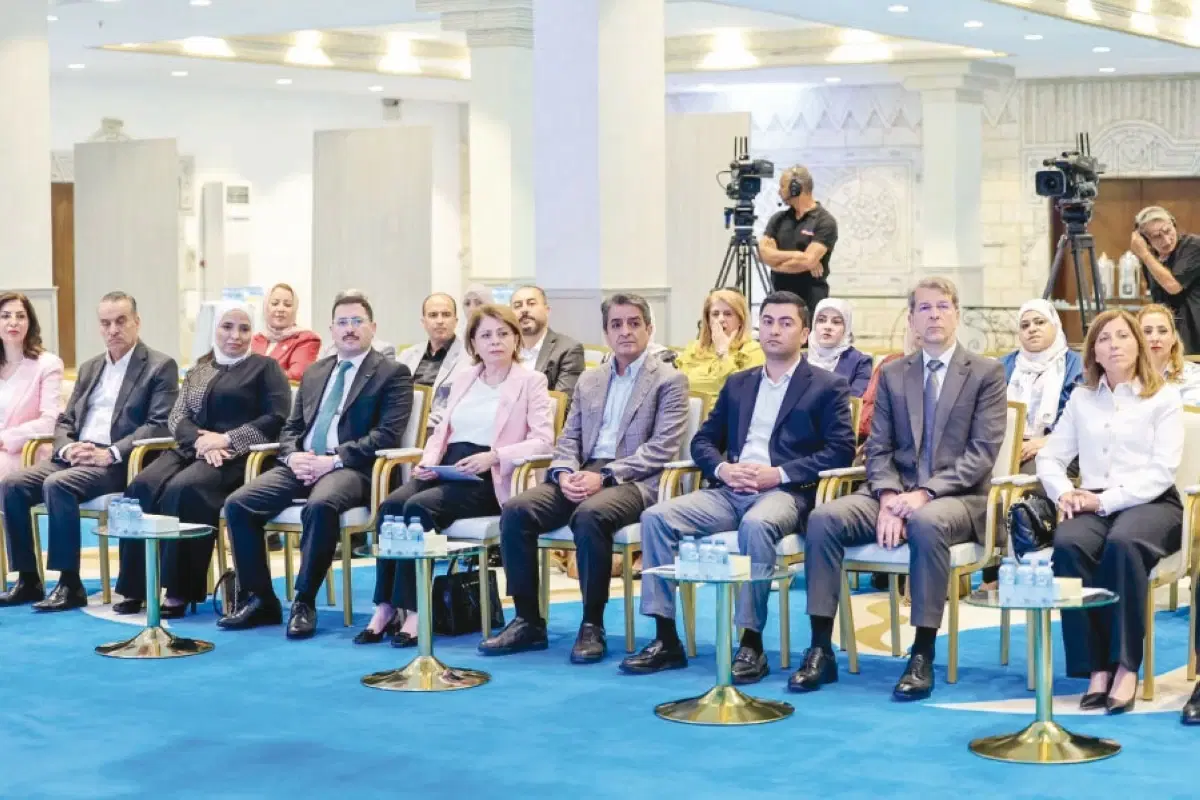
The program was launched at an event held yesterday, Saturday, at Al-Hussein Youth City, under the patronage of the Minister of State for Public Sector Development, Engineer Badria Al-Balbisi, in the presence of the Minister of Youth, Dr. Raed Sami Al-Adwan, the President of the Public Service and Administration Bureau, Engineer Fayez Al-Nahar, the Ministry's Secretary-General, Dr. Mazen Abu Baqar, UNICEF Representative in Jordan, Mark Rubin, Director of the King Abdullah II Center for Excellence, Engineer Widad Qatishat, and the CEO of Generations For Peace, Lama Hattab, with the participation of ministry directors, youth directorates, and heads of youth centers.
In his speech, Al-Adwan emphasized that the program represents an integrated institutional path for building the capacities of those working with youth, starting with identifying needs, moving to developing knowledge and skills and applying them in the workplace, and ultimately measuring their impact on performance and the services provided to youth.
He explained that the program is linked to the directions of the National Youth Strategy 2026-2030, aligns with the requirements for human resources development in the public sector, and supports the Ministry's direction toward developing and modernizing youth centers and improving the efficiency of services provided across the Kingdom's governorates.
He pointed out that the program is based on five main areas for capacity building, eight specific and measurable goals, and approximately 300 training hours, aiming to reach 130 youth centers across the Kingdom's governorates through paths that account for the different roles, responsibilities, and professional needs of the target groups.
He indicated that the program combines self-learning, face-to-face training, blended learning, practical application, and training of trainers, contributing to preparing cadres capable of transferring expertise, training colleagues, and developing professional practice, stressing that the program's success will be measured by the change it brings to staff performance, the method of managing programs, and the level of services provided to youth.
In turn, Al-Balbisi said that the program stems from the importance of investing in youth workers, as they are the closest to youth and the most capable of understanding their aspirations and translating policies and programs into a tangible impact on their lives.
She explained that this approach is consistent with the philosophy of public sector modernization, which is not achieved by developing systems and procedures alone, but by the employee's ability to translate them into better service and experience for the citizen, noting the importance of shifting from training as an activity to capacity building as an investment in performance and impact.
Al-Balbisi stated that working with youth requires keeping pace with their changing needs and utilizing evidence, data, and technology, in addition to providing safe and inclusive environments, emphasizing that the true success of the capacity building program for youth workers will not be measured by the number of training hours or participants, but by the change it creates in the way of working and the impact on the lives of youth.
She called on youth workers to exchange experiences and transfer knowledge to their institutions, and to treat this program as an opportunity to develop youth work practice, saying: "The true value of knowledge begins when it is transformed into practice, and its impact expands when it moves from the individual to the team, and from the team to the institution."
The ceremony included an interactive presentation by the Director of the Human Resources Directorate, Sahar Abu Hammour, during which she addressed the program's goals, expected outcomes, training plan, areas, levels, and target groups, as well as the implementation methodology and regulations governing the training and application process.
The ceremony also included a panel discussion titled "From Capacity Building to Performance Improvement," with the participation of the Director of the Youth Leadership Preparation Center at the Ministry of Youth, Dr. Shorouq Al-Hashim, the Director of the Public Sector Modernization Program Management and Implementation Unit at the Prime Ministry, Engineer May Alian, and the Director of Evaluation and Accreditation Tools Development at the Public Service and Administration Bureau, Dr. Rima Al-Zawahreh.
The program includes an integrated training plan targeting heads and supervisors of youth centers and all staff, covering five main areas including technical competencies related to the pillars of the National Youth Strategy, institutional management and leadership, program and service quality development, core competencies for working with youth, and continuous professional development.
The technical competencies area in the program covers topics of active citizenship, culture and creative arts, learning, skills and economic empowerment, comprehensive health and well-being, and sports and physical activity.
The institutional management and leadership area in the program also includes center management and team leadership, foundations and instructions for managing youth centers, planning and performance management, partnerships and resource mobilization, and change management.
In the area of program and service quality development, the program focuses on designing youth activities, quality standards for programs and centers, communication and outreach to youth, and digitalization and responsible use of artificial intelligence.
The core competencies for working with youth axis also addresses meaningful youth participation, safe and youth-friendly environments, protection and prevention of sexual exploitation and abuse, referral and case management, gender, inclusion of persons with disabilities, data management, and monitoring, evaluation, and learning.
The program also allocates an axis for continuous professional development that includes training of trainers, professional mentoring and guidance, and peer learning, contributing to the transfer of knowledge and expertise and enhancing learning within the Ministry and youth centers.
The trainings are distributed according to beginner, intermediate, and advanced levels, and in formats including self-learning, face-to-face training, blended learning, practical application, and training of trainers.