Jordanians on Social Media.. A Strong Unity in the Face of the Karak Terrorist Crime
Amman5 min read
Share
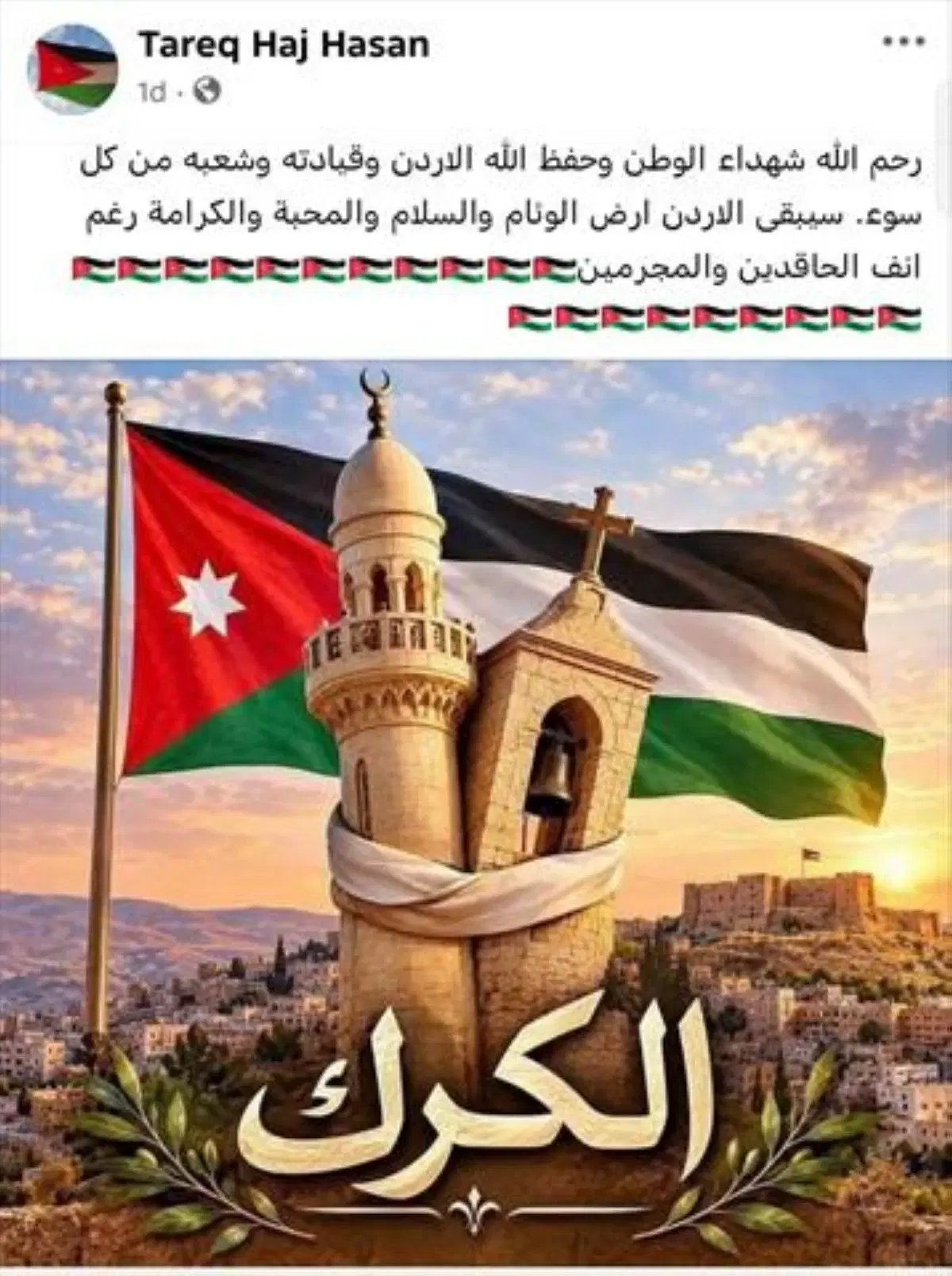
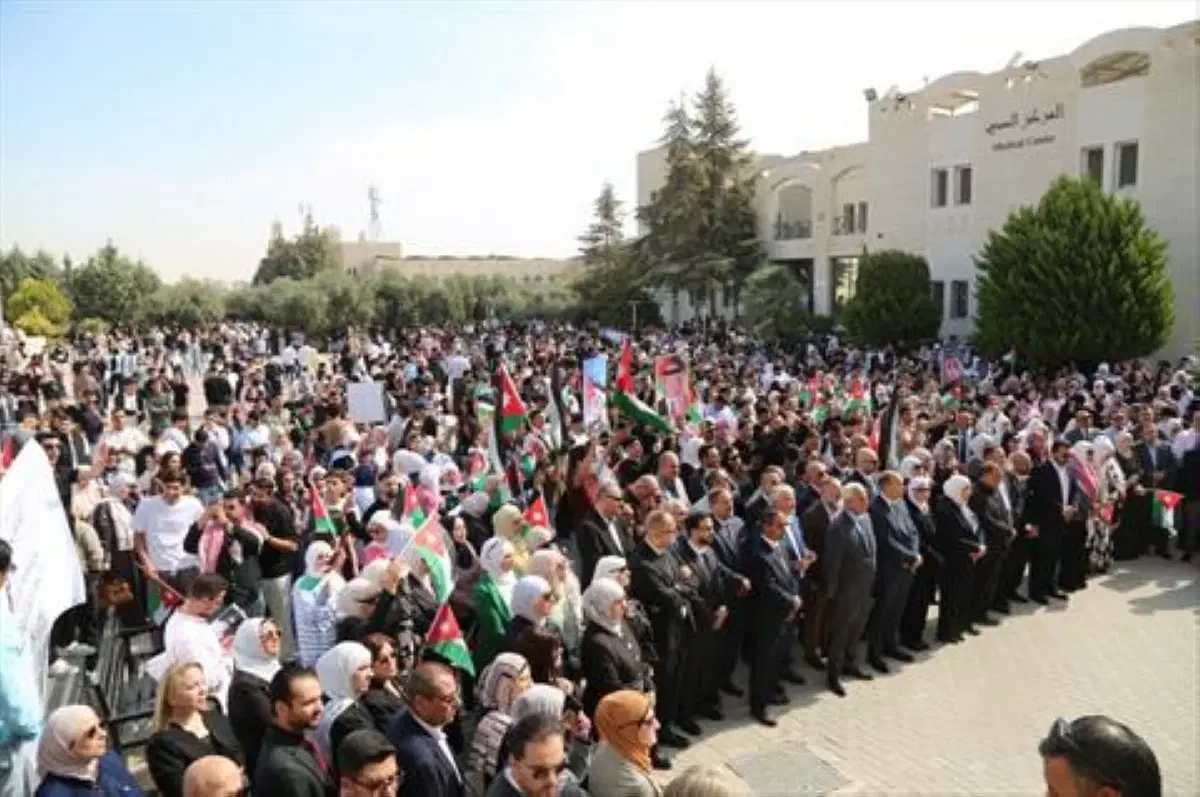
Social media sites in Jordan were draped in black, and national flags were raised on Jordanians' pages and personal profile pictures, expressing sadness and anger over the heinous terrorist crime that targeted Karak Governorate. Within hours, the platforms transformed into a vast space for mourning and solidarity, amidst a consensus on rejecting terrorism and rallying around the nation and its leadership.
Jordanians, regardless of their origins, backgrounds, or locations, showed strong unity in the face of this crime. Mourning posts did not distinguish between one citizen and another, and the language of shared blood and a common destiny took precedence over all else.
Posts frequently included expressions of mercy for the martyrs and prayers for the injured for a speedy recovery. There was a notable presence of photos and names of the victims, alongside images of Karak, its castle, its minarets, and its church bells, in a visual message that the crime targeted the entire fabric of society.
It became clear that popular anger had turned into broader cohesion. Commentators agreed that the attack would not undermine the nation's security or the unity of its people, and demanded that the perpetrators receive their just punishment.
His Majesty King Abdullah II bin Al-Hussein wrote on his X platform account: "We will confront the terrorist act that targeted Karak with the harshest penalties." He added that "all Jordanians from the north of the country to its south are partners in land and stance," and that "the blood of a Jordanian is precious, and we will strike with an iron fist anyone who transgresses against this country."
Raji Mufleh wrote, mourning the victims alongside photos of the martyrs: "Oh Karak, the blood that flowed in you is our blood, and the pain this time has a more bitter taste in our hearts." He added that they are "brothers in blood, soil, and destiny, partners in homeland and dignity."
In the same context, several clans and families announced the opening of funeral homes for the martyrs and called for a funeral gathering for the Karak martyrs at the clan's diwan after the Maghrib prayer. Jordanians circulated the invitation cards, which bore both the symbols of the crescent and the cross, indicating that the mourning was a collective national event.
Abdulrahman Hamed, in a post on a local group, called for declaring three days of mourning "as determined by the Royal Hashemite Court." He urged Jordanians to "wear our shemagh inside out as a simple gesture of solidarity" with the martyrs and the church of Karak.
Many Jordanians also postponed their celebrations and weddings, settling for brief congratulations or complete cancellation of festivities, out of respect for the blood of the martyrs and the feelings of their families. Activists interacted with calls to moderate the manifestations of social occasions during the days of mourning.
Imran Al-Dmour wrote in a lengthy post: "The blood of the martyrs is a trust, justice is a right that does not accept compromise, and holding criminals accountable is a duty that does not lapse with time." He emphasized that "terrorism does not create glory" and that "darkness, no matter how intense, does not triumph over the truth."
Many clan diwans, unions, and parties lowered their flags in mourning for the martyrs and issued statements of grief and solidarity, amidst calls to stand behind the state and its security institutions.
Osama Haddad pointed to the city's inclusive national dimension, writing: "Karak, which brought its Muslim and Christian children together in love and brotherhood, will remain a witness that terrorism has no religion." He continued that the blood of its children is "one, and the affliction is the affliction of all."
Dr. Sahar Al-Batoush went in the same direction, viewing that the crime leaves "a deep, unhealed wound in the conscience of humanity." She said that "innocent blood is one, and grief has no sect," adding: "The Christian is a brother in the homeland, and the Muslim is a brother in the homeland."
Writer and journalist Mohammad Mohsen Obeidat focused on the human side of the victims, noting that one of them, Fadi, was "the only child of his parents," and mentioning Dr. Khaled Al-Halsa, the "doctor of the poor." He wrote that "Jordan is one family, and terrorism will not break our unity nor undermine our resolve."
Faisal Al-Abadi, attaching his post with a photo of His Majesty among members of the Armed Forces, affirmed that "our pain is one and our affliction is one." He prayed to God to protect Karak and its people, and to "keep its people united in the face of hatred and terrorism."
Local pages and forums wrote that His Majesty King Abdullah II headed personally to "point zero" in Karak Governorate, where he checked on the injured. The post spread with a video clip of the site, and citizens commented on it with expressions of loyalty and pride.
Thus, social media was a mirror of a national unity expressed by Jordanians through words, images, and stances.