Jordanian Universities Strengthen Their Presence in International and Local Forums
Universities8 min read
Share
Jordanian universities continued, on Sunday, to strengthen their administrative and academic presence in international events and forums, represented by scientific and research participations, alongside the implementation of a number of new administrative formations.
The President of the Board of Trustees of Al-Zarqa University, Engineer Samir Al-Habashneh, during his participation in the "Middle East Universities" meeting held in the Russian capital, Moscow, discussed ways to expand the horizons of academic and research cooperation between Russian and Arab higher education institutions, and enhance partnerships in scientific and technical fields.
The meeting, according to a statement from Al-Zarqa University, was held at the Moscow Aviation Institute, with the participation of representatives of the World Assembly of Peoples, and presidents and representatives of a number of universities and academic institutions from Jordan, Iraq, and Syria, where participants discussed institutional communication mechanisms, the development of cooperation areas, and the exchange of expertise between higher education institutions in Russia and the Middle East.
Al-Habashneh presented a presentation about Al-Zarqa University and its academic programs and specializations, highlighting the university's interest in engineering specializations, particularly aviation engineering and the applications of drones in peaceful uses, especially in the fields of agriculture, industry, and environmental protection, in addition to the university's role in supporting the education process and developing the higher education system.
The Russian side expressed its readiness to enhance cooperation with Arab universities, foremost of which is Al-Zarqa University, which opens the way for developing academic and research partnerships, and exchanging scientific and technical experiences and experiments, and the two sides agreed to hold a subsequent meeting in the capital Amman to follow up on areas of cooperation and explore joint work opportunities.
Al-Habashneh, on behalf of the Chairman of the Board of Directors of Al-Zarqa for Education and Investment Company, Dr. Mahmoud Abdul Razzaq Abu Shu'ayra, and the President of Al-Zarqa University, Dr. Nidal Al-Rumaihi, emphasized the depth of Jordanian-Russian relations and their continuous development, pointing to the importance of building on these relations and enhancing cooperation paths in various fields.
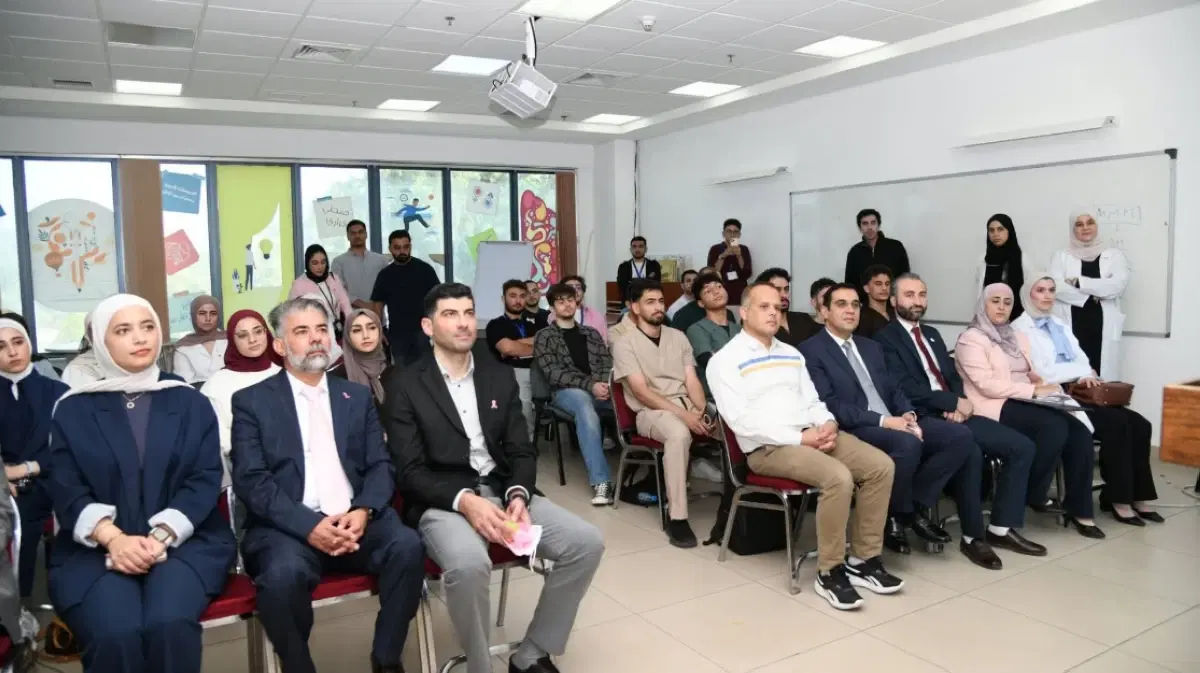
Al-Zarqa University participated in the activities of the Scientific Day for Quality and Patient Safety "Day of Change 13", organized by the Ministry of Health, with the aim of entrenching the concepts of quality in health care, enhancing patient safety, and transforming ideas and commitments into tangible practices and applications.
The university's participation was through a number of faculty members and students from the Faculty of Nursing, who presented educational models and creative projects that reflect the application of academic knowledge and modern technologies in developing health practices and improving the level of services provided to patients.
The university held a specialized exhibition during which it showcased the educational means used in the medical field, brain function testing techniques, alongside a group of innovative projects implemented by nursing college students, most notably a project aimed at reducing bed sores in patients, relying on sensitive sensors linked to artificial intelligence technologies.
The university also presented an application that simulates first aid methods for children, which contributes to enhancing practical and training skills, and raising the readiness of students to deal with emergency cases according to interactive educational methods.
During its participation, the university showcased its efforts in community service, through visits and field programs implemented by its cadres and students in hospitals and health centers, mental health hospitals, elderly care centers, special education centers, and government hospitals, enhancing its community role and linking academic knowledge with field practice.
The Al-Zarqa University exhibition witnessed interaction from participants and visitors, where gifts were distributed to attendees to enhance communication and interaction with the scientific day activities.
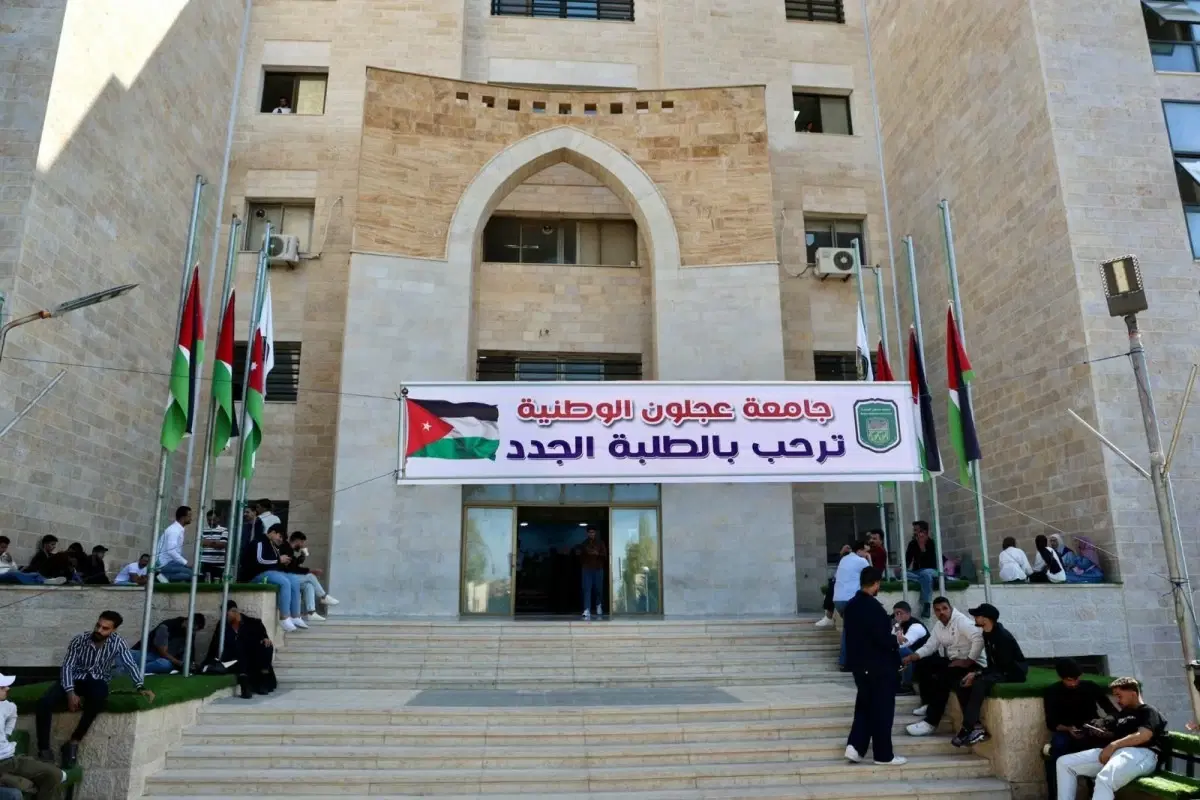
Al-Ajloun National University participated in the activities of the International Conference on Smart Information Systems and Computing, held in the UAE, from September 14 to 16, 2026, with the participation of researchers and academics from more than 31 countries, in cooperation with the IEEE global organization.
The university was represented in the conference by the Dean of the Faculty of Sciences, Dr. Ghazi Al-Shaqah, who presented a scientific research paper entitled: "A Secure Rubric-Grounded LLM Code Review Assistant for Software Engineering Education".
The paper addresses the development of a secure assistant for reviewing programming codes using large language models, based on custom evaluation criteria for software engineering education.
The Professor of Economic History and Islamic Civilizational Thought at the university, Dr. Ghida Katibi, participated in the activities of the specialized international conference entitled: "Anatolia and the Islamic World during the Mongol Era", organized by the Seljuk Studies Institute at Seljuk University in Konya, Turkey, with the presence of an intellectual and scientific elite that included 63 researchers from 11 countries from around the world.
Katibi presented a research paper entitled: "Features of Civilizational Interactions in the Islamic World after the Battle of Ain Jalut", in which she documented civilizational interactions in their economic, social, and cultural dimensions, which the Islamic world witnessed during the period of the Tatar invasion and thereafter.
The researcher confirmed in her paper that the reality of these aspects represents an accurate reflection of the nature of the interactions that were prevalent in those areas, and documented the extent of the influence and intermingling in the human relations existing between individuals of the civilized society on the one hand, and the prevailing political systems on the other hand.
The research paper concluded that the civilizational interaction between the Tatars and the Islamic civilization was divided in its impact into two main stages, the first represented by the era of the Tatar invasion and its characteristics, while the second stage was embodied in the stability of the Tatar elements within the fabric of the Islamic society and civilization, and the establishment of Mongol sultanates and kingdoms that witnessed diverse development in economic, social, and cultural fields.
The study pointed out that the Battle of "Ain Jalut" constituted a pivotal station and a prominent intellectual awareness phase in the movement of historical writing in Islamic civilization, where historical sources allocated wide spaces to record and analyze economic terms and indications that included taxes, trade, agriculture, and money, alongside social dimensions that dealt with population migration, lineage, culture, and psychological and educational aspects.
At Al-Balqa Applied University, the faculty member in the Faculty of Technical Education, Dr. Haifa Al-Jarrah, participates as an international judge in triathlon sports, within the activities of the Asian Games held in Nagoya, Japan, in an international participation that reflects the presence of Jordanian academic competencies in international sports forums.
The university stated in a statement that the participation comes in line with the direction of the Faculty of Technical Education to enhance its presence in international forums and provide an opportunity for its cadres to participate in events, which contributes to developing practical expertise and exchanging knowledge.
At Yarmouk University, the Board of Trustees, during a session chaired by the Chairman of the Board, Dr. Tayseer Al-Naimi, approved the nomination of the University President, Dr. Malek Al-Sharairi, to implement academic formations in the university.
The Council decided to appoint Dr. Khaled Ghraibah and Dr. Ahmed Al-Sharifien as Vice Presidents of the University, Dr. Muhammad Al-Muhammad as Dean of the Faculty of Sharia and Islamic Studies, and Dr. Bassam Al-Radaida as Dean of the Faculty of Fine Arts.
The Council also decided to appoint Dr. Muawiya Al-Shnaq as Dean of the Faculty of Information Technology and Computer Science, Dr. Hassan Al-Balas as Acting Dean of the Faculty of Medicine, Dr. Amjad Al-Fahoum as Dean of the Technical College, and Dr. Mutasim Shatnawi as Dean of Student Affairs.
The Council decided to accept the resignation of the Vice President of the University, Dr. Raba Al-Batayneh, the Dean of the Faculty of Medicine, Dr. Jumana Al-Suleiman, and the Dean of Student Affairs, Dr. Ahmed Al-Sharifien.
The Council also decided to continue Dr. Amjad Al-Nasser as Vice President of the University, Dr. Muheeb Awawdeh as Dean of the Faculty of Sciences, Dr. Khaled Al-Huzaima as Dean of the Faculty of Arts, and Dr. Yahya Bani Melhem as Dean of the Faculty of Business.
Dr. Hani Abadi continues as Dean of the Faculty of Educational Sciences, Dr. Awad Al-Zaben as Dean of the Hajjawi Faculty of Technological Engineering, Dr. Ahmed Al-Bata'ine as Dean of the Faculty of Physical Education and Sports Sciences, and Dr. Muhammad Al-Bashaira as Dean of the Faculty of Law.
Dr. Khaled Al-Bashaira continues as Dean of the Faculty of Archaeology and Anthropology, Dr. Zuhair Al-Tahat as Dean of the Faculty of Media, Dr. Saad Al-Sa'ad as Dean of the Faculty of Tourism and Hotels, Dr. Alaa Al-Jubali as Dean of the Faculty of Pharmacy, Dr. Muawiya Khatatbeh as Dean of Scientific Research and Graduate Studies, and Dr. Rasmia Al-A'mar as Acting Dean of the Faculty of Nursing.