Simultaneously, what has been achieved confirms that the team does not rely on a single name to produce results. Amidst experienced figures and new faces beginning to claim their place, the features of a generation capable of continuing the journey have emerged.
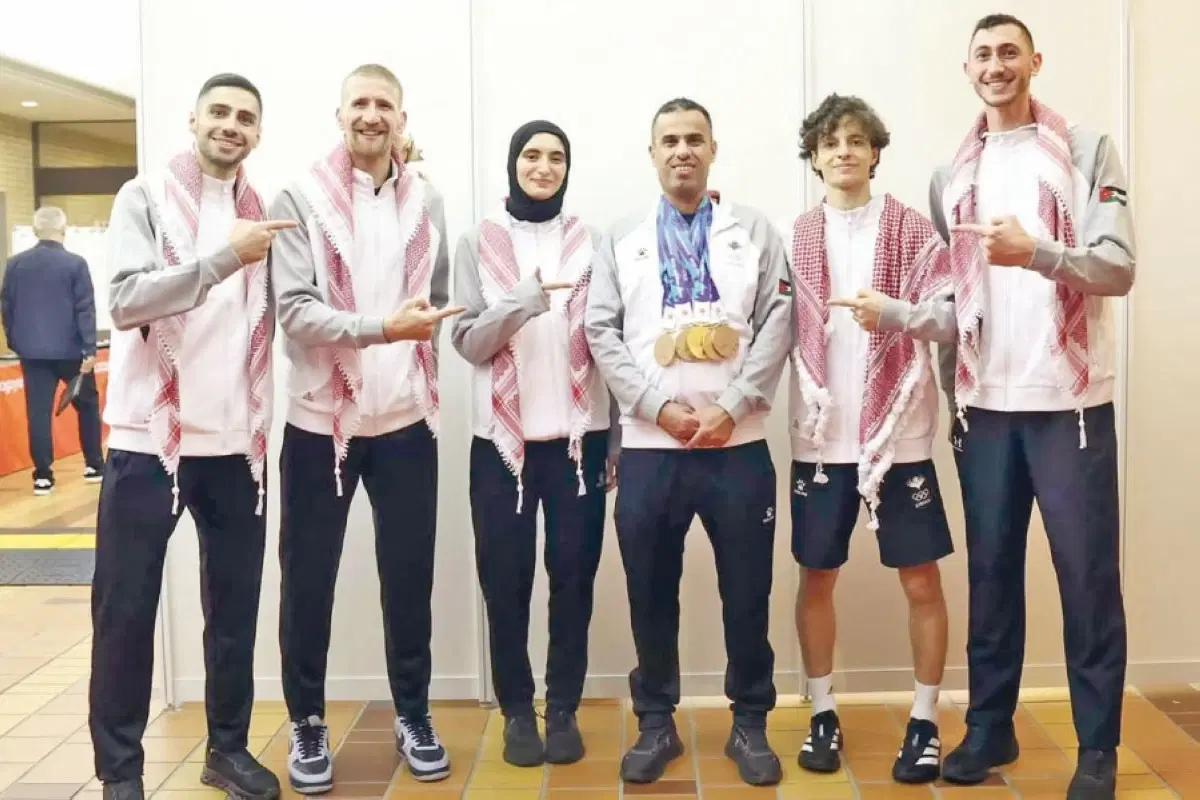
At the forefront of this harvest came Fadia Kherfan, after crowned with the gold medal in the under-57 kg weight category, marking one of the most important milestones of her career and giving the participation a major boost. This crowning achievement is an extension of the development shown in her performance over the past period, as she began to prove herself among the players capable of competing in major tournaments.
The value of the gold medal was not tied to the result alone, but also to the competition Kherfan faced in Nagoya against names with extensive experience at the continental level. Her journey to the final and subsequent clinching of the title reflected a clear development in her level, while giving her additional confidence as she continues her path in international tournaments.
With this achievement, Kherfan left Nagoya with a different profile, now carrying an Asian Games gold medal in her record—a result that adds a great deal to her career and gives her the motivation to continue working in the next phase.
Alongside Kherfan's gold, the rest of the team completed the picture with four bronze medals won by Saleh Al-Sharabaty, Zaid Mustafa, Jaafar Al-Daoud, and Mohammad Al-Adarbeh, bringing the team's total tally to five medals. This is what gives the participation its true value, as the results were distributed among multiple players and were not tied to a single name.
The harvest also revealed a clear blend of experience and youth. Al-Sharabaty and Mustafa possess extensive experience in major tournaments, while Al-Daoud and Al-Adarbeh have begun to prove themselves at this level. This diversity is important because it preserves the team's experience while simultaneously opening the door for new names.
Hence, this harvest seems important for what comes next, and not just for what was achieved in the tournament. Five medals provide the coaching staff with a foundation to build upon, opening the way for the continued development of young elements, alongside retaining experienced athletes and benefiting from their experiences in upcoming commitments.
As for Kherfan's gold medal, it remains the most prominent headline of this participation. It did not come separate from the overall harvest, but rather served as its peak, transforming a successful participation into a golden achievement of even greater value.
Ultimately, Jordanian taekwondo emerged from Nagoya with an image that confirms its ability to continue competing, giving the current generation a new boost to keep going.