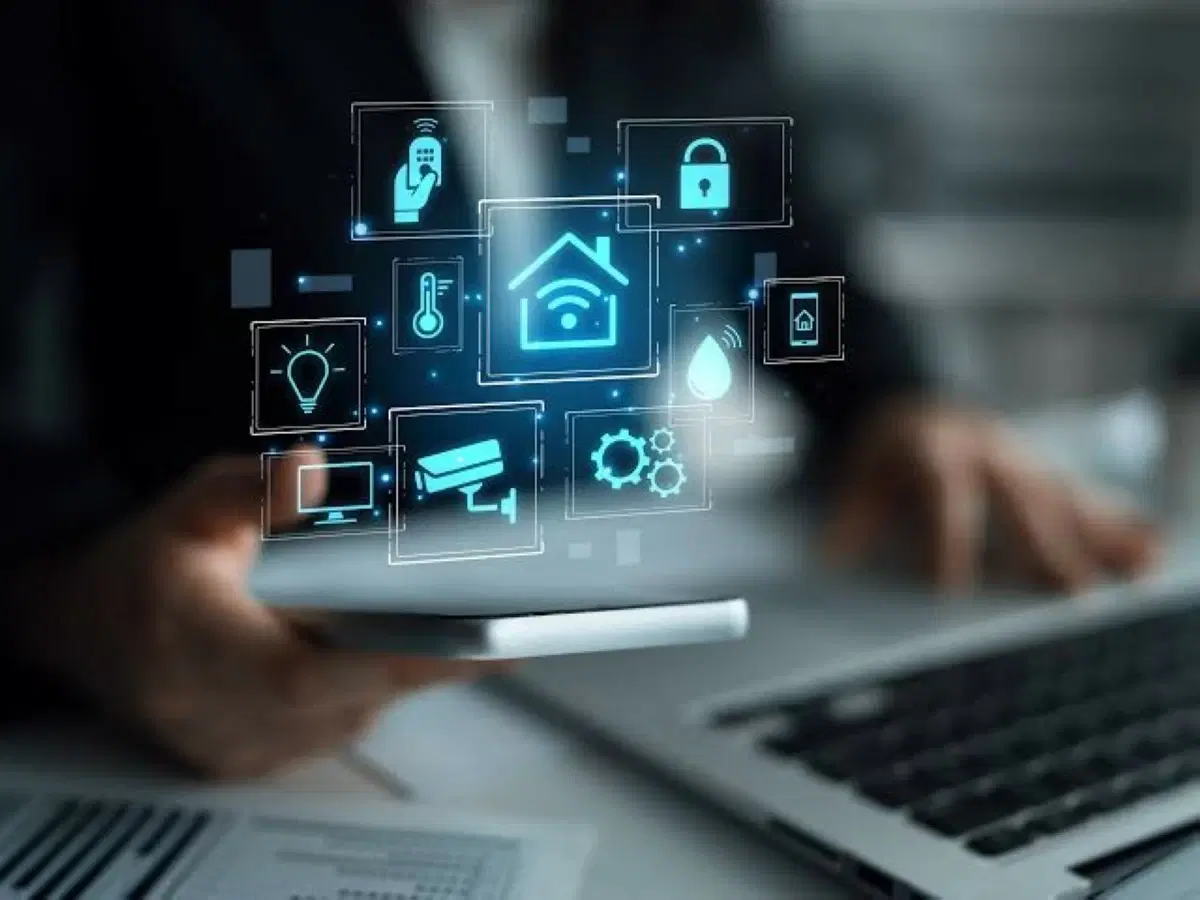
The cyberattack that targeted cooling systems in hundreds of major stores in France has raised concerns about the security of smart devices, after it led to the breakdown of display refrigerators and the spoilage of quantities of fresh and frozen products, highlighting the risks that internet-connected devices may face, whether in stores or homes.
These risks are becoming increasingly important with the rapid proliferation of smart home appliances, which now include refrigerators, air conditioners, surveillance cameras, and other equipment that can be controlled remotely via mobile applications.
According to estimates by the market analytics firm "Fortune," the size of the smart home device market reached about $163 billion in 2025, with expectations for it to rise to $179 billion by the end of 2026, reaching $278 billion by 2034, at an annual growth rate of 5.62%.
The risks of hacking these devices are not limited to disrupting their functions or changing their settings; they may turn into an entry point that attackers exploit to access the home internet network, and from there to computers, phones, and associated personal accounts.
According to a previous report by the "CNET" website, cyberattacks targeting smart home devices increased by 124% during 2024, compared to previous periods.
How do you protect your smart home devices?
Protecting a smart home requires addressing three fundamental aspects: securing the internet network, protecting accounts and applications associated with the devices, and ensuring that the devices themselves are updated and their security settings are strengthened.
According to security guidelines from the company "Kaspersky," connecting devices to the internet offers many advantages, such as ease of control and energy efficiency, but it requires taking measures that reduce the chances of hacking and maintain privacy.
1. Secure your home internet network
Protection begins with using a strong and unique password for the Wi-Fi network, and enabling secure encryption protocols, such as WPA2 or WPA3, whenever available.
It is also recommended to change the default password for the router, and to take advantage of its built-in security features, while constantly updating its software to close known security vulnerabilities.
2. Dedicate a separate network for smart devices
Separating smart home devices from personal phones and computers is one of the important measures to limit the effects of hacking.
This can be achieved by using an independent guest network on the router, or by creating a dedicated network for IoT (Internet of Things) devices, if the device supports this feature.
This step helps reduce the chances of attackers moving from a hacked device to the rest of the devices connected to the network, although protection also depends on the isolation settings provided by the router.
3. Protect your accounts associated with the devices
Applications from manufacturers allow for remote control of smart devices, making the protection of associated accounts a fundamental necessity.
Therefore, be sure to use long and unique passwords for each account, enable two-factor authentication whenever available, and do not share login credentials with others.
It is also important to review the devices and sessions recorded in the account, and revoke access that is unknown or no longer needed.
4. Constantly update devices and applications
Smart devices may contain security vulnerabilities that allow attackers to exploit them, especially when they run on outdated software.
For this reason, firmware and application updates should be installed as soon as they become available, and automatic updates should be enabled if the option is available and reliable.
It is also preferable to purchase devices from companies that provide continuous security support, and to check the duration of updates they offer before purchasing.
5. Minimize remote access to your devices
Some devices allow control from outside the home, but this feature may increase risks if not properly secured.
Disable remote access when you do not need it, turn off unnecessary services and features, and avoid connecting devices to untrusted applications or platforms.
As for surveillance cameras and devices that handle sensitive information, it is important to review application permissions and ensure that access to them is limited to authorized persons.
Can smart devices be used safely?
The spread of cyberattacks does not mean that one must give up smart home devices; rather, it emphasizes the importance of using them consciously and applying comprehensive protection measures.
A strong password alone is not enough, and updating a device does not compensate for weak network or account settings. The best protection is achieved by combining securing the router, separating smart devices from the main network, protecting accounts, and updating software regularly.
With the increasing reliance of homes on internet-connected technologies, cybersecurity is no longer limited to computers and phones, but has become an essential part of protecting daily devices, personal data, and the integrity of the home network.