Foreign Ministers of Egypt, Turkey, Pakistan, and Saudi Arabia affirm support for the two-state solution and freedom of navigation
Amman3 min read
Share
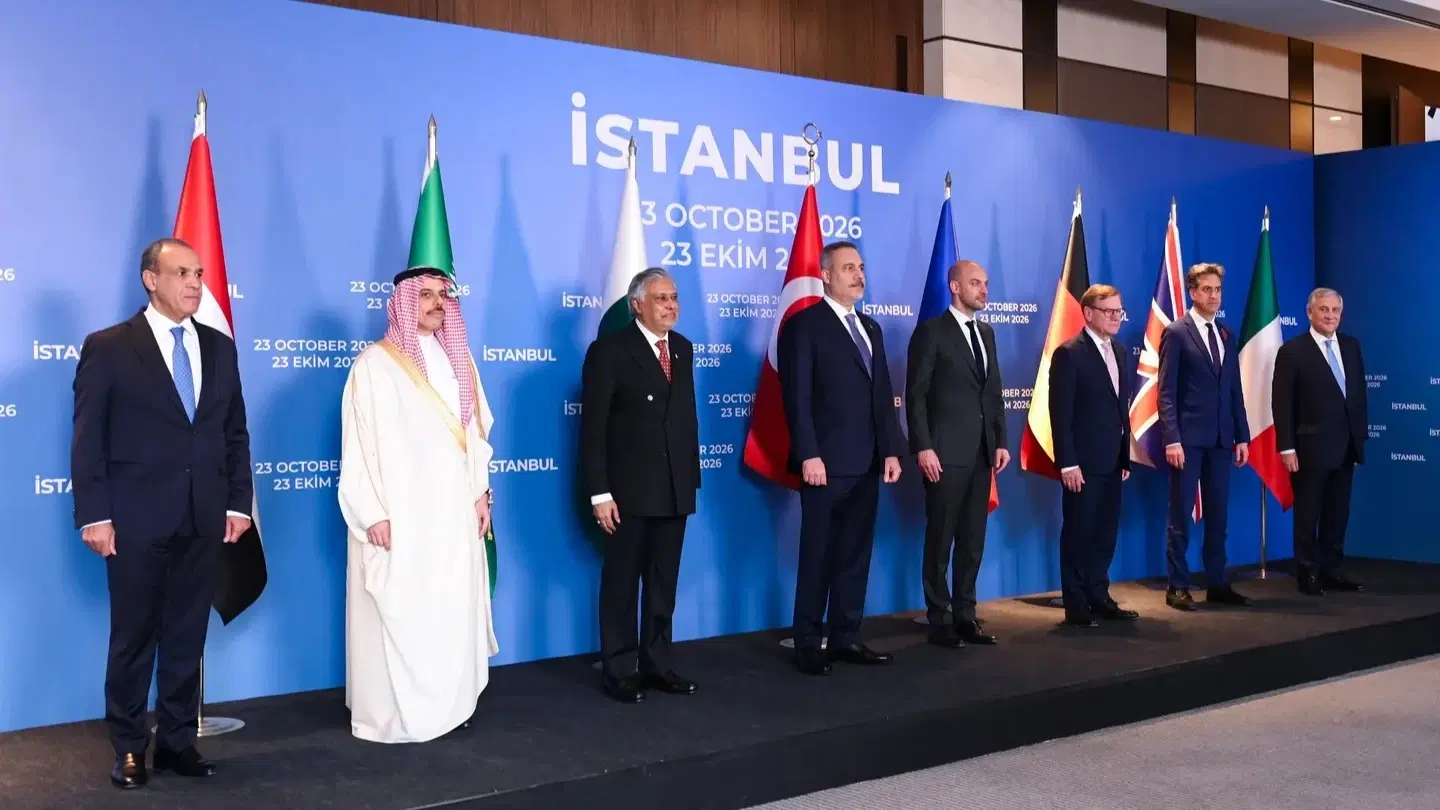
The Foreign Ministers of Egypt, Turkey, Pakistan, and Saudi Arabia held a meeting yesterday, Saturday, in Istanbul to discuss regional issues of common interest and to intensify diplomatic efforts to promote peace and stability in the region and beyond.
In a joint statement, the ministers emphasized the necessity of adhering to the principles and purposes of the United Nations Charter, stressing that the Israeli occupation and its policies represent a primary source of instability. They reaffirmed their support for the legitimate rights of the Palestinian people, foremost of which is their inalienable right to self-determination and the establishment of their independent, sovereign, viable, and geographically contiguous state, based on the June 4, 1967 lines, with East Jerusalem as its capital, in accordance with relevant United Nations resolutions.
They stressed the need to accelerate the implementation of the two-state solution to achieve comprehensive peace in the Middle East, calling for an immediate cessation of Israeli violence, an end to measures aimed at changing the legal and historical status of Jerusalem, a halt to settlement activities in the West Bank and Jerusalem and settler violence against Palestinians, an end to the humanitarian suffering in the Palestinian territories, and ensuring the continuous flow of humanitarian aid to the Gaza Strip and the commencement of its reconstruction.
Regarding the Yemeni issue, the ministers condemned the escalation by the Houthi militia and the continuation of its attacks on Saudi Arabia, particularly the targeting of civilians and civilian infrastructure, as well as attacks on commercial vessels in the Red Sea and the Bab al-Mandab Strait.
They expressed their full solidarity with the Yemeni government and Saudi Arabia, calling on the Houthis to immediately cease all military actions, threats, and attacks, and to return to the political path in good faith.
Regarding the military conflict between the United States and Iran, and the developments surrounding the Strait of Hormuz, the ministers emphasized the necessity of addressing the conflict exclusively through dialogue and diplomacy, and preventing the targeting of civilians and civilian infrastructure, including ships.
They expressed their support for the memorandum of understanding in Islamabad and welcomed the continued diplomatic efforts aimed at preventing further escalation, affirming their commitment to reaching a lasting negotiated solution.
The ministers stressed the vital importance of freedom of navigation, ensuring maritime safety and security, and protecting navigational rights and freedoms, warning that the disruption of maritime corridors threatens global supply chains and the flows of energy, fertilizers, and food, and negatively impacts the most vulnerable groups in the region and the world.
They rejected any measures or restrictions that would disrupt legitimate navigation, calling for the rapid and full resumption of safe and unimpeded passage through the Strait of Hormuz.
The ministers agreed to continue close consultation and coordination on the regional issues raised, in a manner that supports efforts aimed at containing crises and enhancing security and stability.