Decline in the number of political parties from 38 to 30
Mergers represent a positive phenomenon
Amman12 min read
Share
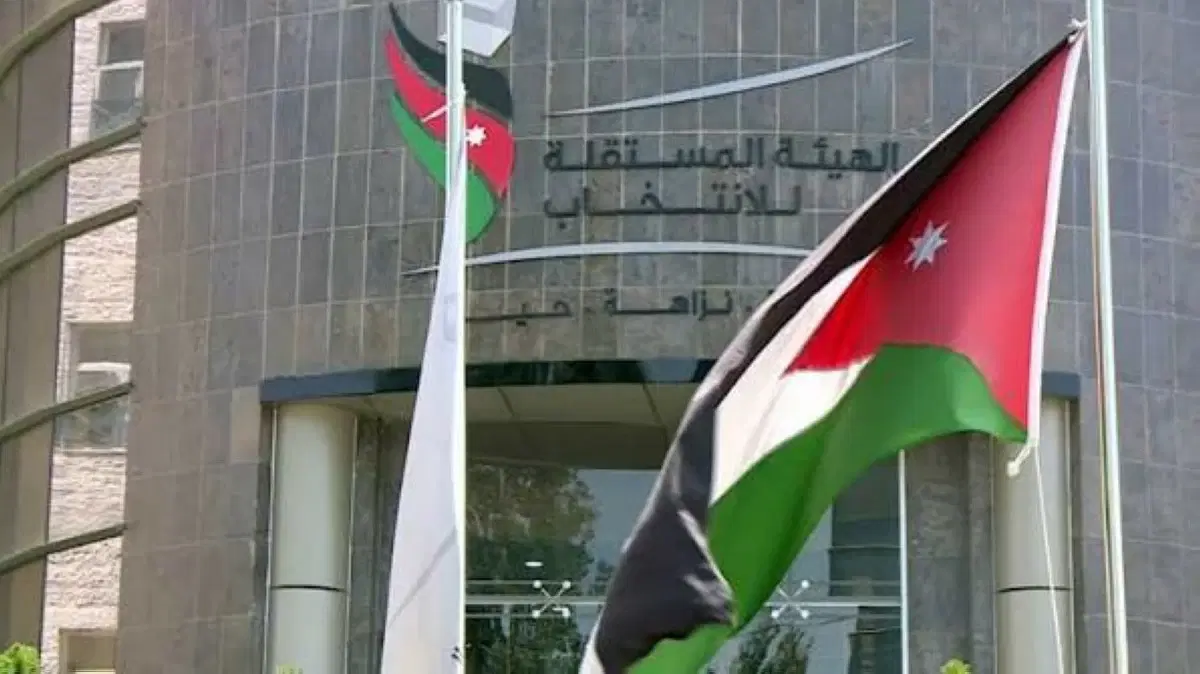
The Independent Election Commission (IEC) announced the issuance of a Court of Cassation decision to dissolve the Jordanian Al-Ghad Party, following a lawsuit filed by the Board of Commissioners of the Commission, based on violations consisting of failing to submit its final accounts. In compliance with the court's decision issued by the highest judicial authority, the ruling has become final and enforceable.
With this, the number of political parties after the dissolution of the Jordanian Al-Ghad Party becomes 30.
The Secretary of the Register of Political Parties at the IEC, Ahmad Abu Zeid, had stated at the beginning of August 2026 that the number of political parties in Jordan had decreased from 38 to 31, as a result of a series of mergers between a number of political parties, pointing out that mergers represent a positive phenomenon that contributes to unifying efforts and expanding the geographical reach of parties, thereby enhancing their presence and supporting the path of partisan life.
By reviewing the path of the political parties that formed part of the merger projects, it becomes clear that the merger operations that led to the reduction in the number of parties include the following mergers:
First: The birth of the Taghyeer (Change) Party from the merger of three parties
The most recent merger operation approved by the IEC on March 23, 2026, resulted in the birth of a new party named the Taghyeer Party, which included the merger of three parties: the New Approach Party, the Jordanian Shura Party, and the National Integration Party. These three parties participated in the 20th House of Representatives elections, which took place on September 10, 2024, but did not win any seats, whether through their nominations in the general (partisan) district or through their partisan nominations disclosed to the IEC for members in local districts.
Less than three weeks after the announcement of the birth of the Taghyeer Party, the party's Secretary-General, Dr. Fawzan Al-Baqour, held a press conference to introduce the party's program, titled "Change Starts Here," emphasizing that the program constitutes a practical, integrated vision for building a strong, just state based on the rule of law, promoting production, and consolidating social justice. He pointed out that the program does not fall within the framework of slogans, but rather represents a clear methodology based on realistic and implementable foundations, built on accurate measurement indicators.
Al-Baqour explained that the party's program is based on three main pillars: a state of law and institutions, a productive national economy, and a cohesive society based on justice and equal opportunity. Regarding priorities, he indicated that the party places political and administrative reform at the forefront of its priorities by strengthening the rule of law, judicial independence, developing parliamentary performance, and activating decentralization, which enhances accountability and rebuilds citizen trust in state institutions.
On the economic front, he stressed the adoption of a productive economic model aimed at easing the tax burden on citizens, directing support toward production and employment, and stimulating national investment while protecting the middle class. He emphasized the importance of employing and empowering youth by providing real job opportunities, linking education outcomes to the labor market, and developing vocational training programs, which contributes to involving youth in the development process.
Al-Baqour added that the party seeks, in the social justice axis, to support deserving groups, unify social protection programs, and ensure equal opportunities among citizens. In the education sector, he stressed the need to develop a modern education system that promotes critical thinking and is linked to labor market needs, while preserving national identity.
As a result of the merger, the membership size of the Taghyeer Party rose to a total of 4,530 members, distributed as 52.6% female and 47.4% male. The percentage of youth, both male and female (18-35 years old), reached 35.2% of the total party membership. The party has three branches: in Zarqa (Rusayfa), Jerash, and Ajloun.
Second: The emergence of the Mubadara (Initiative) Party from the merger of the Erada and Taqaddam parties
The Mubadara Party issued a statement on October 15, 2025, announcing that it had received the approval of the IEC for the merger of the Erada and Taqaddam parties into a new party named the Mubadara Party, which paves the way for forming the party's new organizational structure, leading to holding its general conference in a smooth and organized manner that ensures the unification of efforts and the activation of communication with bases in various governorates.
This merger, according to those behind it, aims to build a strong partisan base based on a realistic vision and participatory performance, which enhances the party's ability to develop effective programs that keep pace with the priorities of the stage and support the democratic path.
The statement indicated the adoption of a new statute for the unified party, designed to avoid previous gaps in the statutes of the two merged parties, thereby establishing a more efficient organizational framework for partisan work. The statement affirmed that the Mubadara Party will launch from this solid foundation toward consolidating a culture of collective work and providing space for youth and promising cadres to participate in political decision-making, which contributes to enhancing partisan life and ensures the achievement of the supreme national interest.
With this merger, the membership of the Mubadara Party increased, with about 400 new members, to 14,043 members, distributed as 35.9% female and 64.1% male. The percentage of youth, both male and female (18-30 years old), is 34.7% of the total party membership. The new party now has branches in the centers of 10 governorates: Irbid, Jerash, Ajloun, Mafraq, Zarqa, Balqa, Madaba, Karak, Tafilah, and Aqaba.
It is worth noting that the merger of the Erada and Taqaddam parties secured a relatively large number of deputies for the Mubadara Party. Returning to the 20th House of Representatives elections, these two merged parties won 27 parliamentary seats: 6 deputies through the general list and 19 from partisan winners in local districts. However, many cases of departure and affiliation occurred, which led to the stability of the Mubadara Party's parliamentary bloc in the second ordinary session of the House of Representatives at 24 members.
Third: The merger of the Jordanian Al-Ansar Party into the Namaa Party
A joint meeting of the executive leaderships of the Namaa and Jordanian Al-Ansar parties was held on September 14, 2025. During the meeting, the minutes of the meeting of the two parties' leaderships for the purpose of the merger were signed by both the Secretary-General of the Namaa Party, Dr. Mohammad Al-Rawashdeh, and the Secretary-General of the Al-Ansar Party, Dr. Awni Al-Rujoub.
The statement issued by the two parties stated that this step comes in line with the Royal vision within the framework of the political modernization system, and in support of activating popular and partisan participation, and expanding the base of institutional work that meets the aspirations of citizens and faces political and regional challenges and economic repercussions.
It was mentioned that this merger is viewed as a qualitative step that enhances the role of Jordanian parties in strengthening the internal front and unifying national efforts in facing external challenges, thereby consolidating the stability of the state and protecting its strategic interests, and contributing to consolidating a culture of organized collective work as a basic entry point for sustainable political reform that keeps pace with the aspirations of youth and enhances society's confidence in the path of partisan and democratic reform in the Kingdom.
The Jordanian Namaa Party announced on November 10, 2025, the approval of the IEC Board of Commissioners to consider the procedures for the merger of the Jordanian Al-Ansar Party into the Namaa Party under the name Namaa Party as correct and consistent with the merger procedures stipulated in Article (32) of the Political Parties Law of 2022. Thus, the Namaa Party is considered the legal successor to the Jordanian Al-Ansar Party, and all rights belonging to it devolve to it, and it assumes the responsibilities resulting from it.
Accordingly, the IEC considers the Jordanian Al-Ansar Party dissolved by law.
As a result of the merger of the Jordanian Al-Ansar Party into the Namaa Party, its membership size rose to 7,375 members, distributed as 51.1% female and 48.1% male, according to the party register at the beginning of October 2026. The number of youth, both male and female (18-35 years old), is 35.8% of the total membership. Regarding parliamentary presence, the Namaa Party had succeeded in winning a parliamentary seat through its alliance with the Labor Party, after submitting a joint electoral list with it that won two seats within the general district, distributed between the two parties. It is worth noting that the Namaa Party announced the formation of its political bureau on August 3, 2026, chaired by Dr. Awni Al-Rujoub.
Fourth: The National Union Party forms an incubator for the merger of three parties
The National Union Party formed an incubator for the merger of three political parties in two stages: a first early stage, in which the National Current Party merged on January 24, 2024, into the Jordanian National Union Party, in a step described as aiming to strengthen the Jordanian political scene, unify efforts to face upcoming challenges, and pave the way for a new phase of political and social cooperation between the two parties.
The Chairman of the Central Council of the Jordanian National Union Party, Mohammad Al-Khashman, emphasized during the meeting, in the presence of the Secretary-General of the National Current Party, Dr. Hamdi Murad, the importance of strengthening the political power of both parties and embodying a common vision that responds to the requirements of the next phase, in fulfillment of the aspirations of the Jordanian people. He added that this merger represents a turning point in Jordanian political life and the beginning of a new era of partnership and cooperation that transcends ideological differences and places the interest of the nation and the citizen at its priorities.
In turn, Hamdi Murad emphasized that this merger will contribute to forming a strong political front capable of facing economic, social, and regional challenges, and will work to strengthen democracy and transparency in Jordan, as the two parties begin a new journey together toward a promising future for Jordan.
The second merger station was represented by the merger of the Blessed Land Party and the Jordanian Youth Party into the National Union Party. The Board of Commissioners of the Independent Election Commission officially approved on July 17, 2025, the merger of these two parties into the National Union Party, which has become their legal successor. The Blessed Land Party and the Jordanian Youth Party had officially announced their merger into the National Union Party on July 2, as part of the effort to strengthen programmatic partisan work and expand the base of political participation in the Kingdom.
As a result of the mergers into the National Union Party, the membership size as of early October 2026 reached a total of 2,000 members, distributed as 43.6% female and 56.4% male, according to the party registry in early October 2026. The number of youth, both male and female (18-35 years old), accounts for 32.2% of the total membership. Regarding parliamentary presence, the National Union Party won three seats in the 20th House of Representatives in 2024 through its list in the general district, and two seats through its nominations authorized by the Independent Election Commission in the local district. As for the Blessed Land Party, it won only two seats in the general district, while the Youth Party won one seat in a local district, but the seat holder joined the National Charter Party bloc in the House of Representatives.
Party leaders express their opinions on the merger
In statements to "Al-Araby Al-Jadeed," the Secretary-General of the Change Party presented his party's experience as a model for a party that sees merger as a means to build a larger political entity. Regarding this, Al-Baqour says that political convergence and intersection in political programs between parties were essential conditions for the success of any real merger. Al-Baqour expects the coming period to witness further repositioning and mergers among Jordanian parties, but he stresses that the problem of partisan life is not just in the number of parties, pointing out that moving from thirty parties to ten, for example, will not solve the problem if parties cannot build real popular bases, have a presence in governorates, universities, and unions, adopt citizens' issues, present applicable economic and social programs, and prepare new political leaders.
On the other hand, the experience of the Initiative Party presents another model for merger, after the Irada and Taqaddum parties merged into the Initiative Party. In this context, Eid Al-Rawadiyah, a member of the Executive Office and Director of Public Relations at the party, says that the merger stemmed from a shared vision regarding the political modernization system, and from the conviction that the street should deal with parties through their vision and programs, not their number.
Al-Rawadiyah explains that the decision to merge came after reviewing the programs of the two parties and their role in the House of Representatives, as it became clear that there was an intellectual convergence between them. The process began with a joint negotiation committee, on the basis of which a unified statute was prepared, before the two general assemblies voted on the merger, and an interim leadership was tasked with managing the transitional phase until a general conference is held and the party's new bodies are elected.