Consultative Workshop in Rajeb to Discuss Land Degradation Neutrality in Ajloun
Amman2 min read
Share
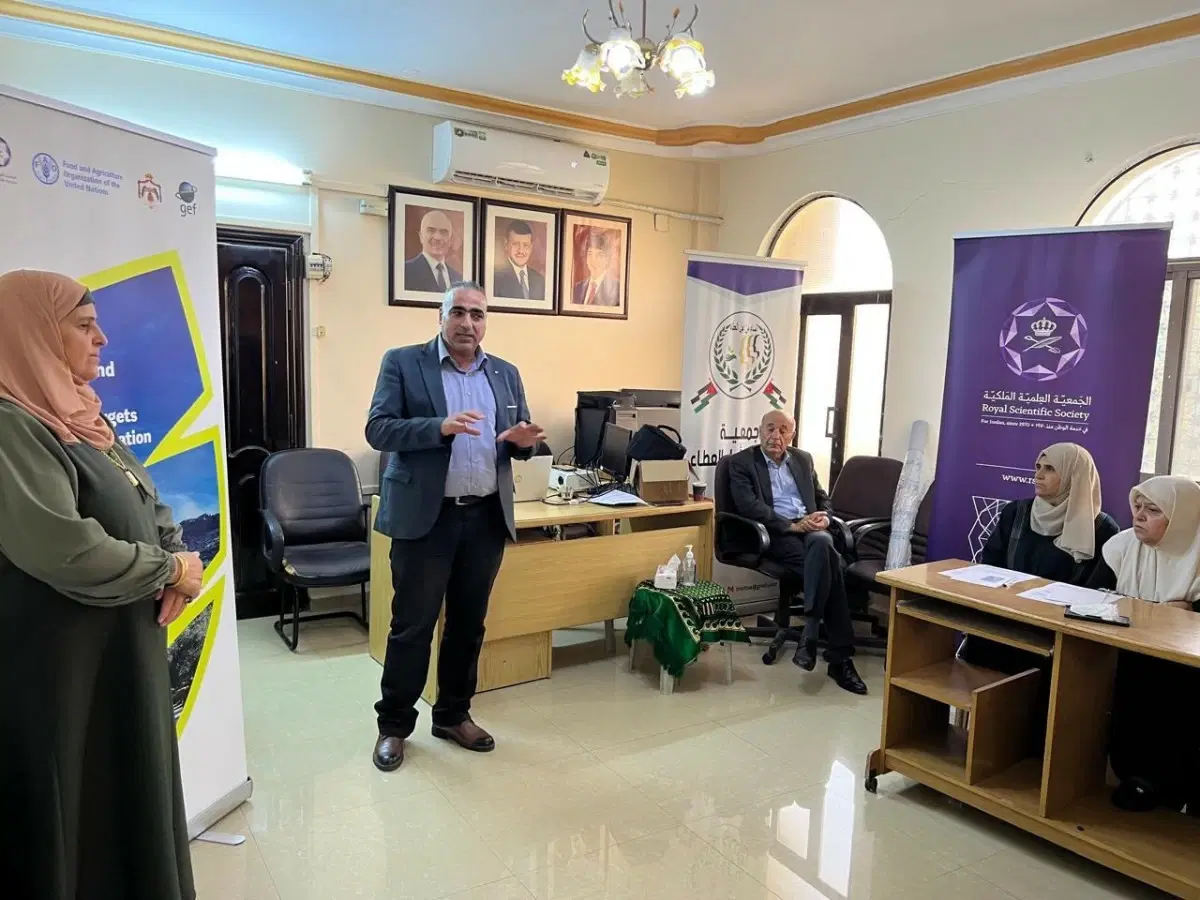
The Royal Scientific Society, represented by the Water, Environment and Climate Change Center – Food Security and Biodiversity Division, organized today, Tuesday, a consultative workshop for stakeholders in Ajloun Governorate, at the Women for Charitable Giving Association headquarters in Rajeb, as part of the project "Achieving Land Degradation Neutrality Goals through Restoration and Sustainable Land Management Programs in Northern Jordan", funded by the Global Environment Facility (GEF), and implemented under the supervision of the Food and Agriculture Organization of the United Nations (FAO).
Project Director Engineer Abdullah Kloub emphasized the importance of collaborative work and involving local communities in implementing the project, which includes programs for restoring forests and pastures, supporting field farmers' schools, and enhancing sustainable land management in the governorates of Ajloun, Irbid, and Mafraq.
Project Coordinator Engineer Khadija Atiyat presented a presentation on the project's objectives and components, emphasizing the importance of supporting national efforts to achieve land degradation neutrality, protect ecosystems, and combat desertification.
Advisor Mahmoud Freihat reviewed the results of land degradation assessment in six natural areas, through maps and field data, with the aim of identifying the areas most exposed to degradation and intervention priorities.
The workshop featured participatory working groups that discussed land uses, causes of degradation, pressures, and conflicts, in addition to mapping degraded sites and identifying priority areas, and formulating a future vision for management and restoration.
Participants also discussed appropriate solutions and interventions according to the sequence of avoidance, reduction, and restoration, and conducted an interactive exercise titled "Cause/Potential Intervention" to identify interventions that address the root causes of degradation.
At the end of the workshop, an agreement was reached on a proposed site for field interventions, and a number of priorities and practices were identified to build on for preparing a participatory action plan for sustainable management and land restoration, based on scientific expertise and local knowledge.
The Women for Charitable Giving Association emphasized the importance of hosting this workshop and strengthening partnership with national, scientific, and local community institutions, contributing to the protection of natural resources and achieving sustainable development in Ajloun Governorate.