4 days without strong solar flares.. The sun enters the longest period of calm since 2021
Amman3 min read
Share
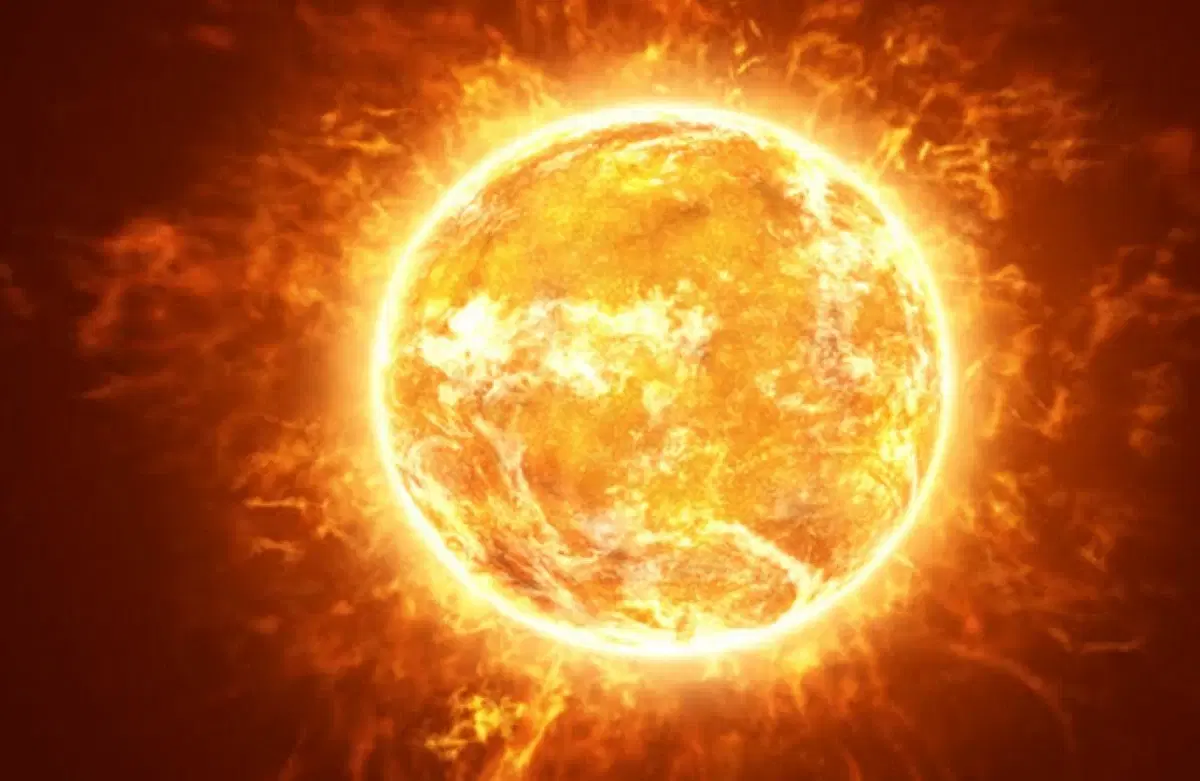
Four consecutive days have passed without any solar flare of class "C" or higher being recorded, in the longest such period since December 2021.
On September 17, the Space Research Institute of the Russian Academy of Sciences announced that the pause lasted four days until the time of its statement, after medium and strong flares disappeared from the surface of the sun.
But does this mean that the sun is starting to lose its activity or that something unusual is happening inside it?.. The short answer: not necessarily.
Short break or start of decline?
The sun goes through cycles of activity that last about 11 years, during which the number of spots and flares increases and then gradually decreases.
The current solar cycle reached its peak about two years ago, so the start of the decline in activity is expected. However, Russian researchers believe that the recent calm is notable due to its timing and duration, and may indicate that the decline is happening at a faster pace than they expected.
The absence of flares for several days is not in itself a serious or exceptional event, as the sun can go through longer periods of calm when it approaches the minimum of its cycle.
Also, 4 days are not enough to judge the direction of the entire cycle, because solar activity does not decrease uniformly, and a quiet period may be followed by a sudden series of strong flares.
What do solar classes mean?
Scientists classify flares according to the strength of the X-rays they emit into five categories: "A", "B", "C", "M", and "X".
Classes "A" and "B" are the weakest, while "C" represents limited or medium-impact flares. Class "M" includes strong flares, and class "X" contains the most severe solar explosions.
The strength of a flare increases by about ten times when moving from one class to the next.
Does the calm affect the Earth?
This calm poses no direct danger to Earth's inhabitants, but it means a lower likelihood of new space disturbances caused by strong flares during that period.
Large solar flares, when directed towards Earth, can cause disruptions to wireless communications, satellite navigation, and power grids, and can also increase the chances of seeing the aurora.
However, the cessation of flares does not guarantee the complete absence of geomagnetic storms, as emissions released by the sun earlier may take days to reach Earth.
Therefore, scientists are monitoring what will happen after the period of calm: will the sun quickly resume its activity, or will the temporary absence of flares be the first indication of the start of the decline of its current cycle?
So far, there is no sign of a serious or permanent change. The sun has not gone out and has not stopped working, but it has taken a slightly longer break than usual.