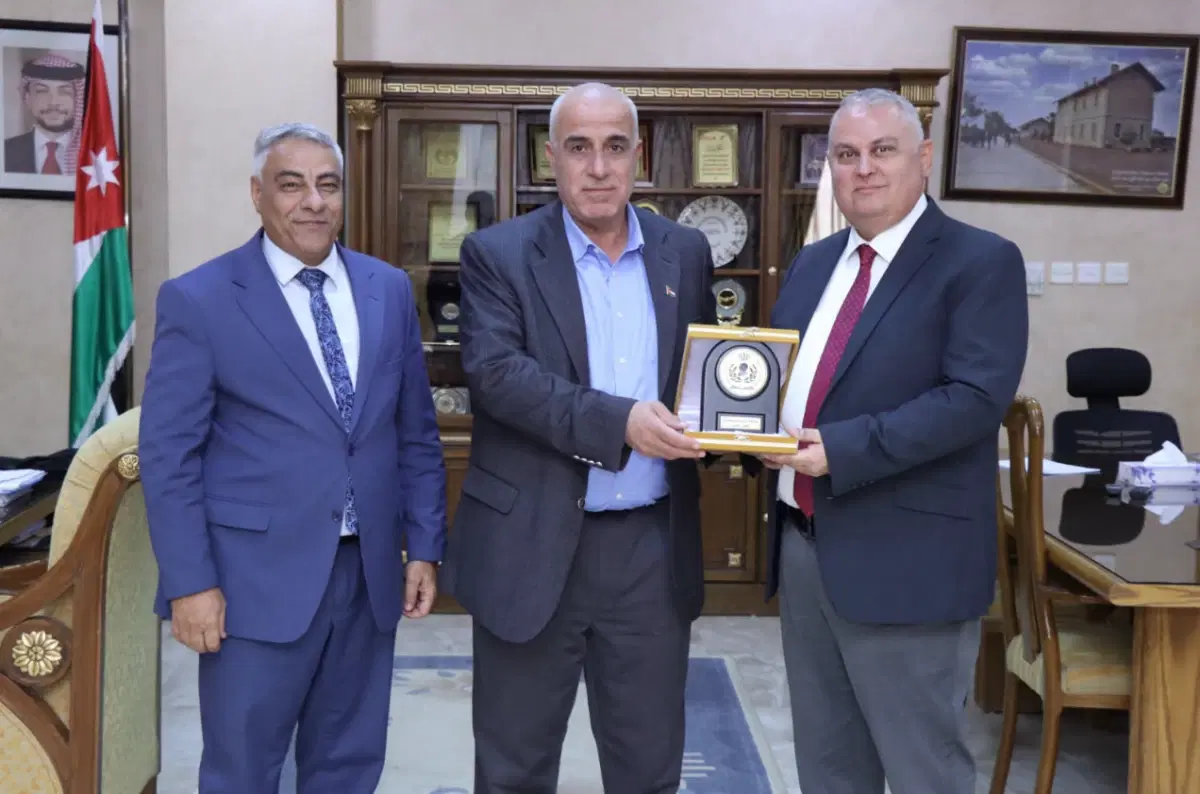
The meeting also addressed the possibility of benefiting from the university's laboratories to conduct soil, water, and environmental analyses, developing field training programs for scientific college students in the company's projects and facilities, and discussing the launch of joint research grants for graduate students and developing applied curricula in the fields of the Internet of Things and digital agricultural data management.
Al-Khasawneh presented the company's vision and investment projects in the field of developing smart agricultural infrastructure, employing artificial intelligence technologies in modern agriculture, in addition to crop production projects and developing smart systems for exploiting natural and environmental resources during the meeting.
He emphasized the importance of partnership with Hussein Bin Talal University, given its academic, research, and scientific expertise, noting the possibility of developing joint projects that combine scientific research and practical application, contributing to the creation of models applicable in dry environments and enhancing the concept of sustainable food security.
For his part, Al-Kharabisheh confirmed that Hussein Bin Talal University views these projects as an opportunity to transition scientific research from the academic framework to applied projects with economic and developmental impact, serving the university and the local community and enhancing its role in achieving sustainable development.
He said that the university looks forward to a new phase of work based on building effective partnerships with the private sector and specialized institutions, employing scientific and research capabilities to implement quality projects in the fields of food security, smart agriculture, artificial intelligence, and sustainability, affirming that the university has the capabilities and academic infrastructure capable of contributing to these projects and supervising them through specialized scientific colleges and centers.