Artificial intelligence solves the mystery of a stolen painting after 20 years
Amman3 min read
Share
Two decades after its disappearance, artificial intelligence has succeeded in helping Italian police find a stolen painting, despite its features being altered to hide its original identity.
The story began in October 2024, during a tour by officers from the Cultural Heritage Protection Unit at an antiques fair in the Italian city of Parma. The officers took photos of the exhibited works and then entered them into a specialized system that compares images with records of stolen art pieces.
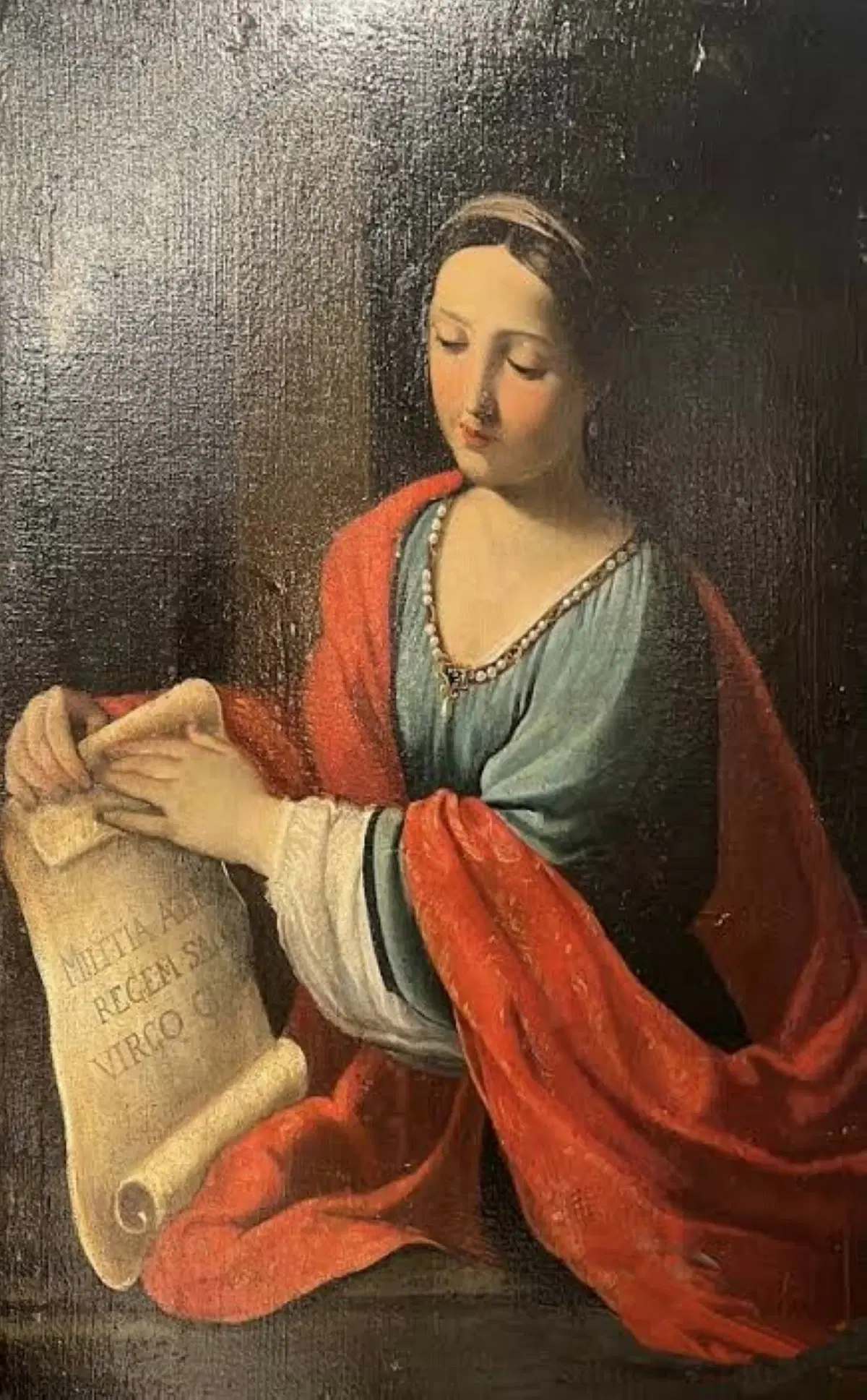
Hours later, the system triggered an alert regarding a painting showing a woman wearing red and aquamarine, holding a scroll, which prompted investigators to return to the fair the next day and seize the work for examination.
Camouflage that failed to deceive the algorithm
The examination revealed that the painting is "Saint Agnes," dating back to the 17th century, which was stolen in 2004 from the "Virgo Potens" church in the city of Sulmona, Abruzzo region.
Parts of the painting had been repainted to hide its religious symbols; the white lamb held by the saint was replaced with a scroll, and the halo and palm branch were removed, making the painting appear as if it depicted an ordinary woman.
Despite this change, the work retained enough visual features to enable the system to link it to the image of the original painting kept in the records.
How did artificial intelligence reveal the truth?
Visual recognition systems rely on analyzing image elements, such as colors, shapes, and composition, and comparing them with other images, rather than relying solely on the artist's name, the painting's title, or its written description.
This technology allows for the discovery of works that may have been altered or displayed under different names by detecting similarities that might be difficult to notice using traditional methods.
However, a technical alert is not considered definitive proof of a work's identity, but rather a starting point for an investigation, as experts take over to examine the painting and verify its authenticity and history.
From discovery to recovery
The case demonstrated the importance of combining modern technologies with human expertise in protecting artistic heritage, especially with the spread of displaying and selling artworks online.
Although artificial intelligence has the ability to accelerate searching and comparison, it faces challenges, including the poor quality of old images, differences in shooting angles, and the similarity between original and forged works.
Furthermore, the system alone cannot prove ownership or identify those responsible for the theft, but it provides investigators with an additional tool that helps them reach important leads.
Ultimately, the camouflage did not succeed in hiding the identity of the Saint Agnes painting forever; it was returned to the Diocese of Sulmona-Valva in 2025, after image comparison led to its discovery, and investigators and experts completed the verification and restoration process.